San Francisco to Wuhan is 6,466 miles (10,405 km), a flight of about 12 hours 30 minutes.
The left seat wins at takeoff but the right seat delivers the more dramatic and geographically rich arrival over the Yangtze River and Wuhan's urban core. Across the Pacific cruise, neither side offers much over open ocean, but the right side also picks up the Japanese archipelago and the Chinese coast on descent, making it the better overall choice.
Flight Path
The great circle route from SFO to WUH tracks northwest over the Pacific, passing south of the Aleutian Islands chain, then crosses the Kamchatka Peninsula's volcanic ridgeline, descends over the Sea of Japan, crosses the Japanese archipelago (Honshu), crosses the Yellow Sea, and enters eastern China over Jiangsu or Anhui province before reaching Wuhan. The Kamchatka volcanoes and the Japanese coast are the most visually distinctive features on an otherwise ocean-dominated route.
Great circle distance and headings ›


Phase by phase
Takeoff from SFO
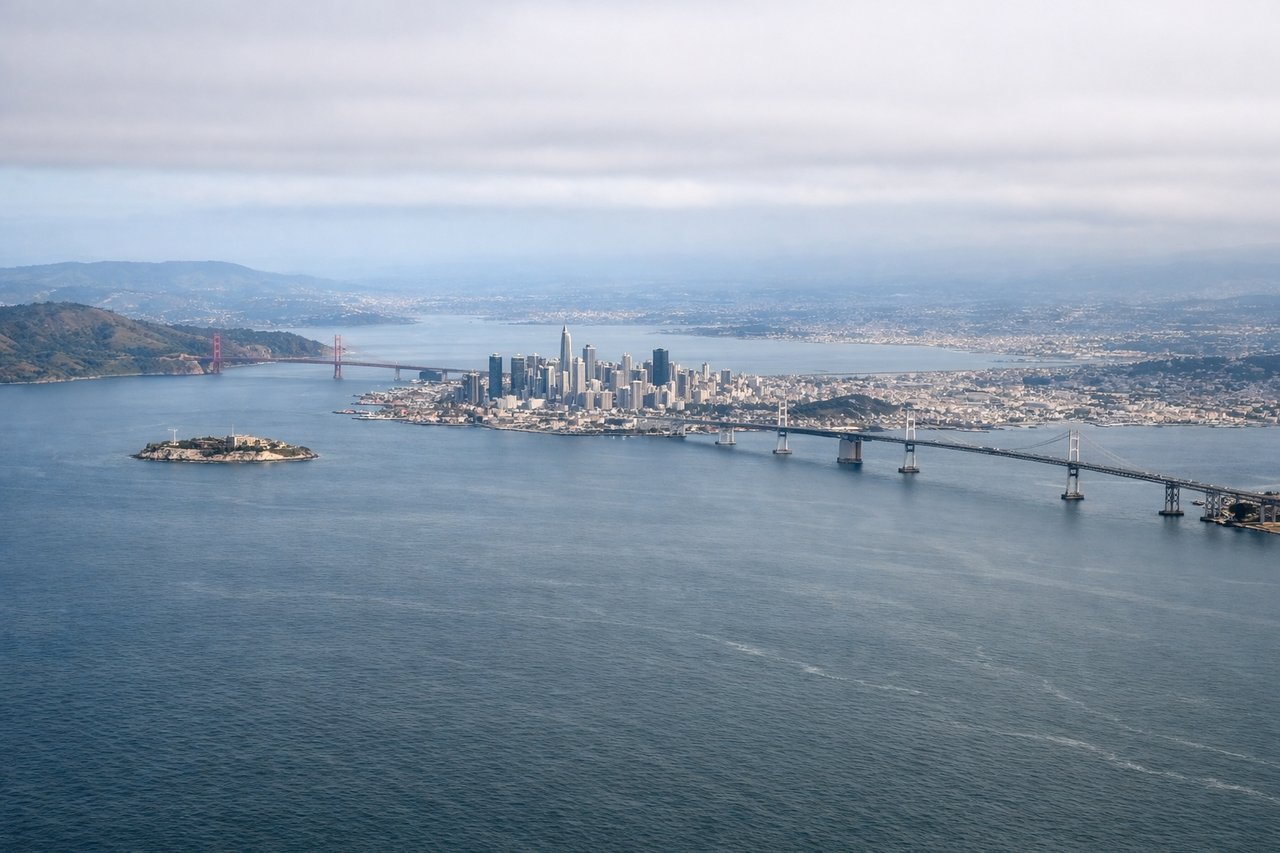
LEFTSFO's primary departure runways (28L/28R) head west over the bay before turning northwest. A left/south-facing seat gives you San Francisco Bay, the city skyline, and the San Mateo Bridge as you climb out. The right side faces open Pacific almost immediately.
Landing at WUH
RIGHTWuhan's Tianhe Airport sits northwest of the city. Arrivals typically come in from the east or northeast on runway 04/22. A right/south-facing seat on approach gives you the Yangtze River snaking through Wuhan's urban core, the Han River confluence, and the sprawling city districts. The left side faces farmland and suburban sprawl north of the city.
Landmarks on this routeAll landmarks →
Will your flight be in sunlight?
Pick a date and time in the Sun Map to watch the sun move across your whole flight.
About This Route
Which side of the plane should I sit on flying from San Francisco International (SFO) to Tianhe (WUH)?
Sit on the Right side of the plane for the best views on flights from San Francisco to Wuhan. The left seat wins at takeoff but the right seat delivers the more dramatic and geographically rich arrival over the Yangtze River and Wuhan's urban core. Across the Pacific cruise, neither side offers much over open ocean, but the right side also picks up the Japanese archipelago and the Chinese coast on descent, making it the better overall choice.
What can I see during takeoff from San Francisco International in San Francisco?
During takeoff from San Francisco International (SFO), sit on the Left side for the best views. SFO's primary departure runways (28L/28R) head west over the bay before turning northwest. A left/south-facing seat gives you San Francisco Bay, the city skyline, and the San Mateo Bridge as you climb out. The right side faces open Pacific almost immediately. Notable sights include: San Francisco Bay, San Francisco city skyline and downtown, San Mateo Bridge, the Santa Cruz Mountains to the south.
What can I see when landing at Tianhe in Wuhan?
When landing at Tianhe (WUH), sit on the Right side for the best views. Wuhan's Tianhe Airport sits northwest of the city. Arrivals typically come in from the east or northeast on runway 04/22. A right/south-facing seat on approach gives you the Yangtze River snaking through Wuhan's urban core, the Han River confluence, and the sprawling city districts. The left side faces farmland and suburban sprawl north of the city. Notable sights include: Yangtze River through central Wuhan, Han River confluence at Hankou, East Lake (Dong Hu) in Wuchang district, Wuhan's dense urban core.
How long is the flight from San Francisco to Wuhan?
The flight from San Francisco International (SFO) to Tianhe (WUH) takes about 12 hours 30 minutes. The shortest flight path between them is 6,466 miles (10,405 km); winds and air traffic control usually add a few percent.
What does the San Francisco to Wuhan flight path pass over?
The great circle route from SFO to WUH tracks northwest over the Pacific, passing south of the Aleutian Islands chain, then crosses the Kamchatka Peninsula's volcanic ridgeline, descends over the Sea of Japan, crosses the Japanese archipelago (Honshu), crosses the Yellow Sea, and enters eastern China over Jiangsu or Anhui province before reaching Wuhan. The Kamchatka volcanoes and the Japanese coast are the most visually distinctive features on an otherwise ocean-dominated route.