The right side wins overall. The Wasatch Range takeoff view is one of the most dramatic urban-to-mountain transitions in North America, and over the Atlantic the right side also tracks closer to Greenland's ice sheet and Labrador coastline on the great circle route. The Paris landing view on the left is excellent but brief — the Wasatch departure is the standout moment of the flight.
Flight Path
The great circle route from SLC to CDG tracks northeast over Wyoming and the Dakotas, then over southern Canada (Manitoba, Ontario), crosses the Gulf of St. Lawrence and Newfoundland, transits the North Atlantic passing south of Greenland, crosses Ireland and southern England, then descends into northern France over the Paris basin. Notable features include the Canadian Shield lakes visible in Ontario, the Newfoundland coastline, and occasional Greenland icecap visibility on the northern horizon.
Great circle distance and headings ›
.jpg?width=600)
.jpg?width=600)
Phase by phase

Takeoff from SLC
RIGHTSLC typically departs westbound on runway 34L/34R or eastbound on 17s. For the most common northward departures, the right side gives you the Wasatch Front — the dramatic east-facing escarpment of the Wasatch Range rising directly above the city. You also get a clear look back at the Great Salt Lake as the aircraft banks northeast.
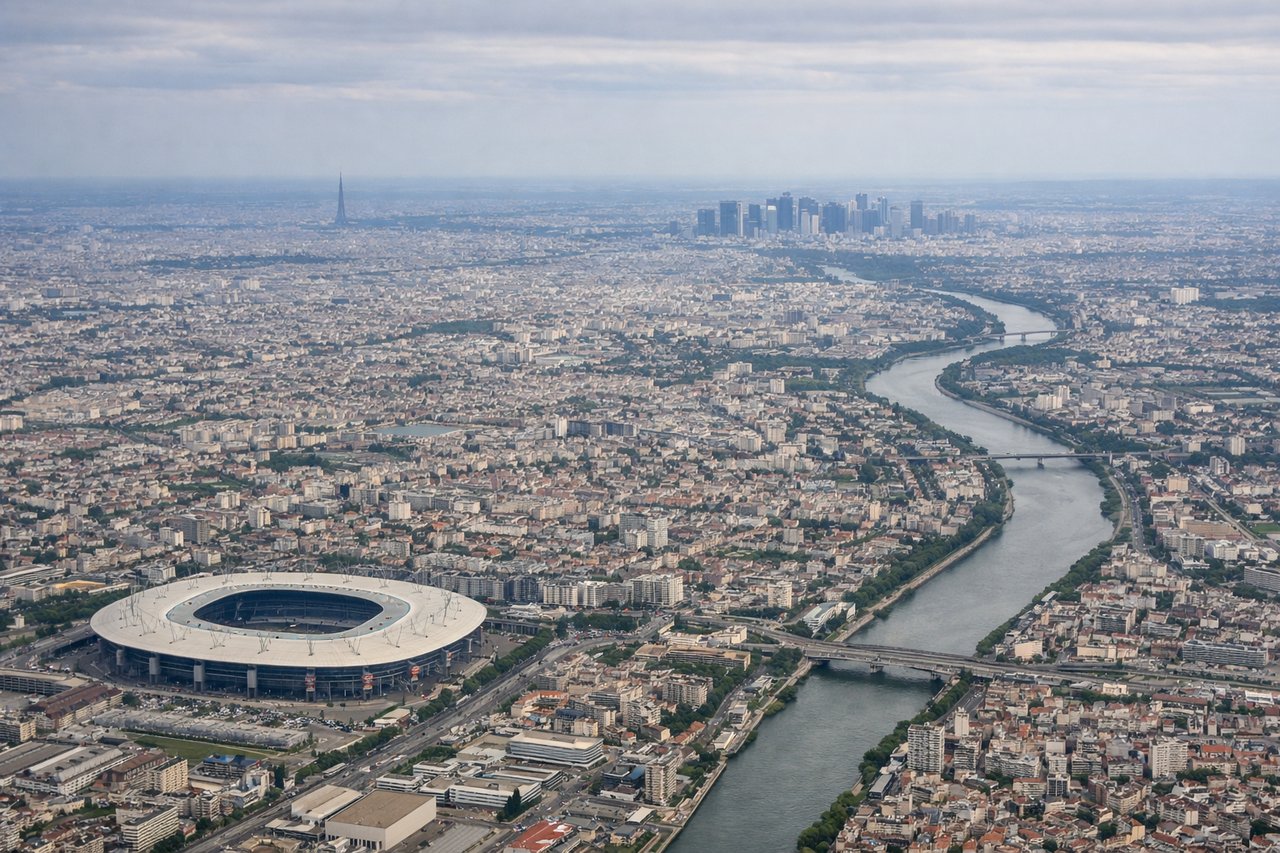
Landing at CDG
LEFTCDG approaches from the west or southwest on runways 26L/26R, meaning the aircraft tracks over the Paris basin from the west. The left side gives you the Seine river snaking through the city, the Eiffel Tower, and the dense Haussmann boulevard layout of central Paris before touchdown.
Landmarks on this routeAll landmarks →
Will your flight be in sunlight?
See exactly which side of the plane gets sun and shade at your departure time.
About This Route
Which side of the plane should I sit on flying from Salt Lake City International (SLC) to Charles De Gaulle (CDG)?
Sit on the Right side of the plane for the best views on flights from Salt Lake City to Paris. The right side wins overall. The Wasatch Range takeoff view is one of the most dramatic urban-to-mountain transitions in North America, and over the Atlantic the right side also tracks closer to Greenland's ice sheet and Labrador coastline on the great circle route. The Paris landing view on the left is excellent but brief — the Wasatch departure is the standout moment of the flight.
What can I see during takeoff from Salt Lake City International in Salt Lake City?
During takeoff from Salt Lake City International (SLC), sit on the Right side for the best views. SLC typically departs westbound on runway 34L/34R or eastbound on 17s. For the most common northward departures, the right side gives you the Wasatch Front — the dramatic east-facing escarpment of the Wasatch Range rising directly above the city. You also get a clear look back at the Great Salt Lake as the aircraft banks northeast. Notable sights include: Wasatch Range (Lone Peak, Mount Timpanogos), Great Salt Lake, Salt Lake Valley grid, Bonneville Salt Flats to the west.
What can I see when landing at Charles De Gaulle in Paris?
When landing at Charles De Gaulle (CDG), sit on the Left side for the best views. CDG approaches from the west or southwest on runways 26L/26R, meaning the aircraft tracks over the Paris basin from the west. The left side gives you the Seine river snaking through the city, the Eiffel Tower, and the dense Haussmann boulevard layout of central Paris before touchdown. Notable sights include: Seine River through central Paris, Eiffel Tower, La Défense business district, Bois de Boulogne.
How long is the flight from Salt Lake City to Paris?
The flight from Salt Lake City International (SLC) to Charles De Gaulle (CDG) takes Approximately 10 to 11 hours.
What does the Salt Lake City to Paris flight path pass over?
The great circle route from SLC to CDG tracks northeast over Wyoming and the Dakotas, then over southern Canada (Manitoba, Ontario), crosses the Gulf of St. Lawrence and Newfoundland, transits the North Atlantic passing south of Greenland, crosses Ireland and southern England, then descends into northern France over the Paris basin. Notable features include the Canadian Shield lakes visible in Ontario, the Newfoundland coastline, and occasional Greenland icecap visibility on the northern horizon.