Right side wins at both ends of the flight. During the Andean climb-out you get the eastern cordillera and Cayambe; over Colombia and Central America the right side tracks closer to the Caribbean coast and gives occasional glimpses of the Colombian and Venezuelan coastlines; and on approach into Miami the right side delivers Biscayne Bay and the Keys.
Flight Path
The route tracks north-northwest over Colombia, crossing the Andes and then the Colombian Caribbean lowlands near Barranquilla and Cartagena. Over the Caribbean Sea the flight passes east of the Yucatán Peninsula and Cuba before crossing the Florida Straits. At cruise altitude you may see the Colombian coastline, the turquoise shallows of the western Caribbean, and the distinctive outline of Cuba's elongated island on the right side roughly 90 minutes before landing.
Great circle distance and headings ›

Phase by phase

Takeoff from UIO
RIGHTQuito's Mariscal Sucre airport uses runway 36 (northbound) as the primary departure direction. A right-side seat faces east toward the Andes cordillera, giving you a direct view of the volcanic peaks that define the region. The city of Quito itself stretches along the valley below on the right side during the initial climb.
Landing at MIA
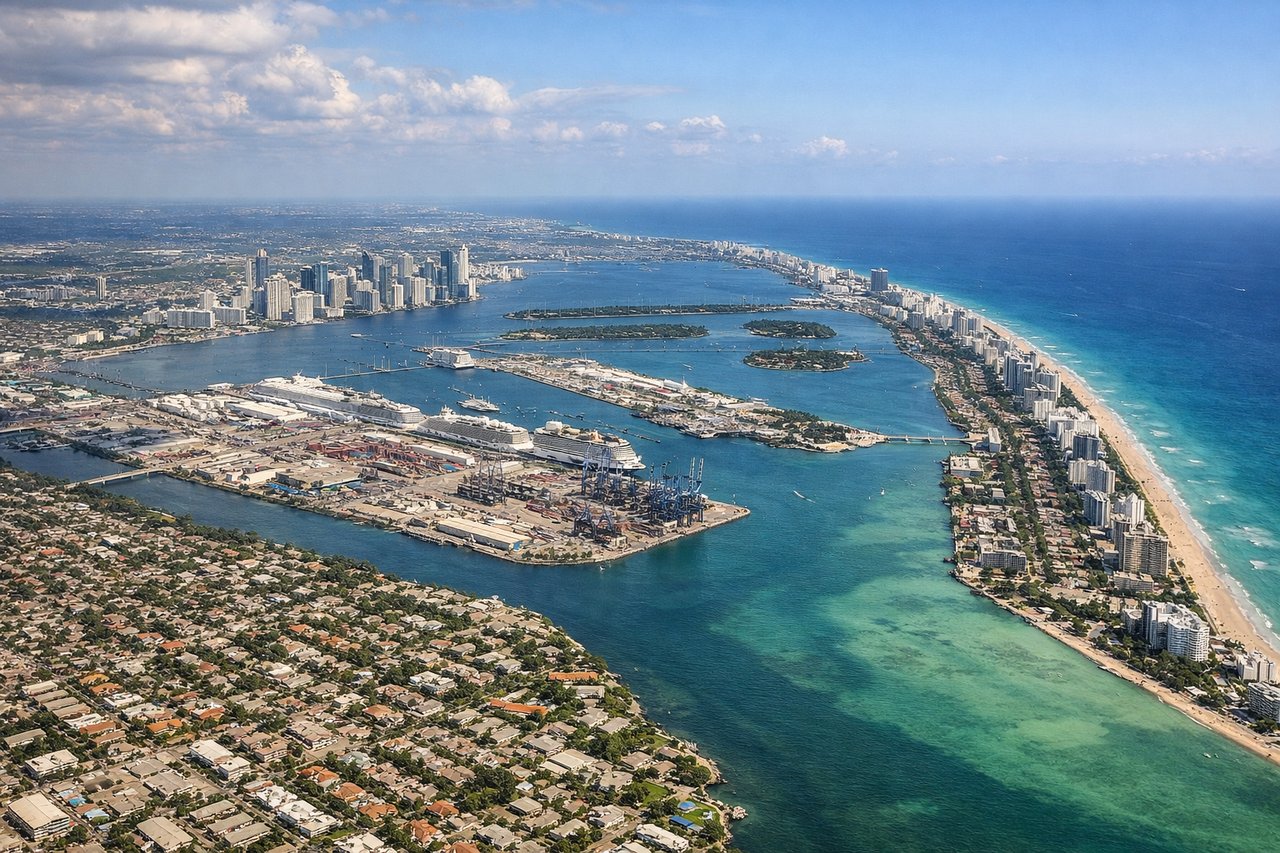
RIGHTMiami International typically uses runway 09 (eastbound) or 08R for arrivals from the south, meaning the approach tracks over the western suburbs and Everglades. Right-side seats face south toward the Florida Keys chain and Biscayne Bay, which are the most visually distinctive features on approach. The turquoise shallow-water colors of Biscayne Bay and the bay's contrast with the urban grid are exceptional.
Landmarks on this routeAll landmarks →
Will your flight be in sunlight?
See exactly which side of the plane gets sun and shade at your departure time.
About This Route
Which side of the plane should I sit on flying from Mariscal Sucre International Airport (UIO) to Miami International (MIA)?
Sit on the Right side of the plane for the best views on flights from Quito to Miami. Right side wins at both ends of the flight. During the Andean climb-out you get the eastern cordillera and Cayambe; over Colombia and Central America the right side tracks closer to the Caribbean coast and gives occasional glimpses of the Colombian and Venezuelan coastlines; and on approach into Miami the right side delivers Biscayne Bay and the Keys.
What can I see during takeoff from Mariscal Sucre International Airport in Quito?
During takeoff from Mariscal Sucre International Airport (UIO), sit on the Right side for the best views. Quito's Mariscal Sucre airport uses runway 36 (northbound) as the primary departure direction. A right-side seat faces east toward the Andes cordillera, giving you a direct view of the volcanic peaks that define the region. The city of Quito itself stretches along the valley below on the right side during the initial climb. Notable sights include: Volcán Cayambe (5,790m) to the northeast, the elongated urban strip of Quito in the inter-Andean valley, the eastern cordillera ridgeline, and the patchwork of agricultural terraces on the Andean slopes.
What can I see when landing at Miami International in Miami?
When landing at Miami International (MIA), sit on the Right side for the best views. Miami International typically uses runway 09 (eastbound) or 08R for arrivals from the south, meaning the approach tracks over the western suburbs and Everglades. Right-side seats face south toward the Florida Keys chain and Biscayne Bay, which are the most visually distinctive features on approach. The turquoise shallow-water colors of Biscayne Bay and the bay's contrast with the urban grid are exceptional. Notable sights include: Biscayne Bay and its turquoise shallows, the Florida Keys chain extending southwest toward the horizon, downtown Miami skyline to the northeast, and the dark green expanse of Everglades National Park to the west.
How long is the flight from Quito to Miami?
The flight from Mariscal Sucre International Airport (UIO) to Miami International (MIA) takes Approximately 5 hours 30 minutes to 6 hours.
What does the Quito to Miami flight path pass over?
The route tracks north-northwest over Colombia, crossing the Andes and then the Colombian Caribbean lowlands near Barranquilla and Cartagena. Over the Caribbean Sea the flight passes east of the Yucatán Peninsula and Cuba before crossing the Florida Straits. At cruise altitude you may see the Colombian coastline, the turquoise shallows of the western Caribbean, and the distinctive outline of Cuba's elongated island on the right side roughly 90 minutes before landing.