The right side wins because it captures Vancouver's mountain-backed skyline on departure and the Fort Worth-Dallas skyline on arrival, while the cruise portion over the Cascades and northern Rockies (visible to the west of the flight path) adds more terrain variety than the flatter eastern view.
Flight Path
The route crosses the Cascade Range near Washington state (with Mount Rainier and Mount St. Helens sometimes visible to the west), then passes over the high plains of Idaho, Wyoming, and Colorado before descending over the flat plains of the Texas Panhandle into North Texas.
Great circle distance and headings ›
.jpg?width=600)
Phase by phase
Takeoff from YVR
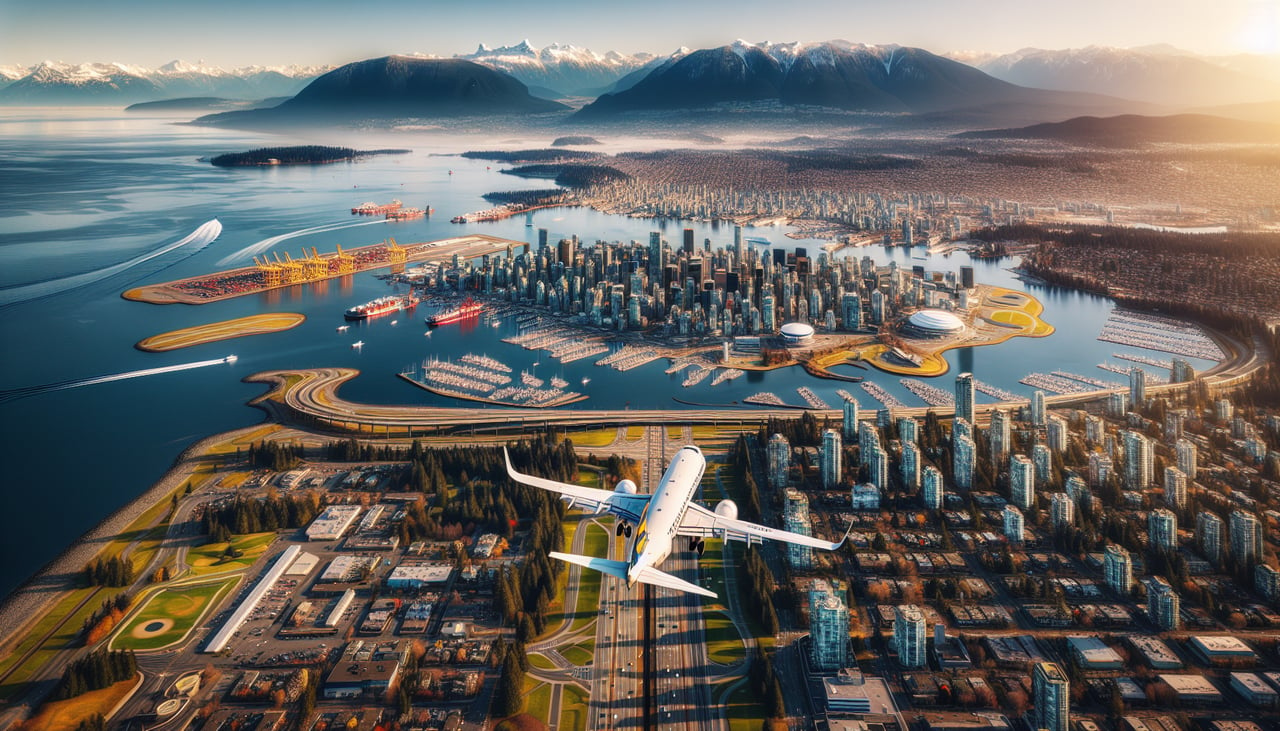
RIGHTAs the aircraft lifts off YVR's westbound runway and banks south toward the U.S., the right side offers a sweeping view back toward Vancouver's skyline, the Fraser River delta, and the North Shore Mountains rising sharply behind the city. The left side mostly shows the flat Fraser delta farmland and the Strait of Georgia with little contrast.
Landing at DFW
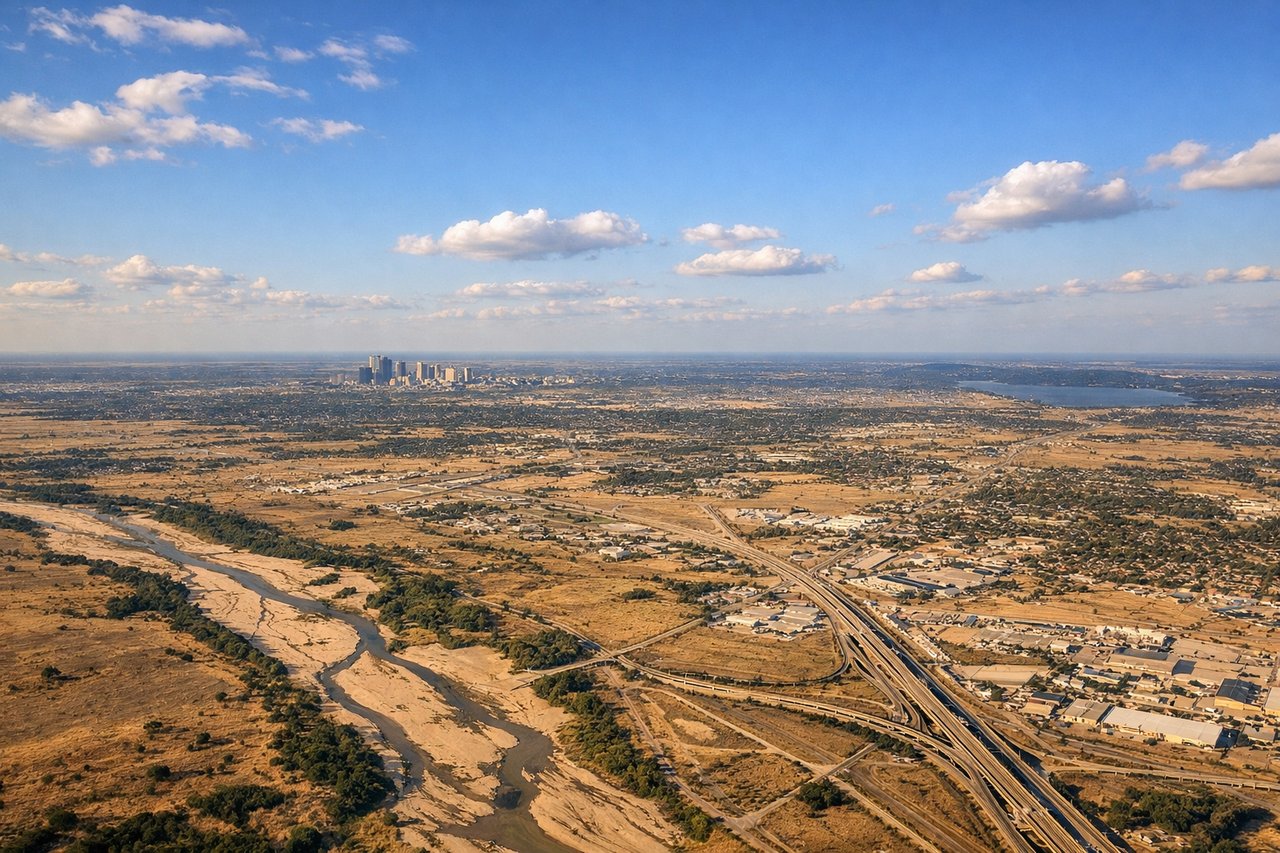
RIGHTOn the descent into DFW from the northwest, the right side gives passengers a clearer look at the merging skylines of Fort Worth and Dallas across the flat North Texas plains, plus a good view of the airport's parallel runway complex during the turn onto final. The left side mostly faces open prairie with little to distinguish it.
Landmarks on this routeAll landmarks →
Will your flight be in sunlight?
See exactly which side of the plane gets sun and shade at your departure time.
About This Route
Which side of the plane should I sit on flying from Vancouver International (YVR) to Dallas Fort Worth International (DFW)?
Sit on the Right side of the plane for the best views on flights from Vancouver to Dallas-Fort Worth. The right side wins because it captures Vancouver's mountain-backed skyline on departure and the Fort Worth-Dallas skyline on arrival, while the cruise portion over the Cascades and northern Rockies (visible to the west of the flight path) adds more terrain variety than the flatter eastern view.
What can I see during takeoff from Vancouver International in Vancouver?
During takeoff from Vancouver International (YVR), sit on the Right side for the best views. As the aircraft lifts off YVR's westbound runway and banks south toward the U.S., the right side offers a sweeping view back toward Vancouver's skyline, the Fraser River delta, and the North Shore Mountains rising sharply behind the city. The left side mostly shows the flat Fraser delta farmland and the Strait of Georgia with little contrast. Notable sights include: North Shore Mountains (Grouse, Seymour, Cypress), Vancouver downtown skyline, Fraser River delta, Strait of Georgia.
What can I see when landing at Dallas Fort Worth International in Dallas-Fort Worth?
When landing at Dallas Fort Worth International (DFW), sit on the Right side for the best views. On the descent into DFW from the northwest, the right side gives passengers a clearer look at the merging skylines of Fort Worth and Dallas across the flat North Texas plains, plus a good view of the airport's parallel runway complex during the turn onto final. The left side mostly faces open prairie with little to distinguish it. Notable sights include: Fort Worth skyline, Dallas downtown skyline (distant), DFW's parallel runway system, North Texas plains.
How long is the flight from Vancouver to Dallas-Fort Worth?
The flight from Vancouver International (YVR) to Dallas Fort Worth International (DFW) takes 3h 20m.
What does the Vancouver to Dallas-Fort Worth flight path pass over?
The route crosses the Cascade Range near Washington state (with Mount Rainier and Mount St. Helens sometimes visible to the west), then passes over the high plains of Idaho, Wyoming, and Colorado before descending over the flat plains of the Texas Panhandle into North Texas.