The left side wins overall because it captures Vancouver's mountain backdrop on departure and keeps a view toward the Rocky Mountain front (Glacier National Park region) during the western portion of cruise, giving the route its most consistent scenic value, even though the right side gets a brief but strong payoff with the Chicago skyline on landing.
Flight Path
The route crosses the Okanogan Highlands and Idaho panhandle before skirting the northern Rocky Mountain front near Montana's Glacier National Park region, then flattens out over the plains of North Dakota and Minnesota, crossing the upper Mississippi River valley and Wisconsin farmland before Lake Michigan comes into view on the descent into Chicago.
Great circle distance and headings ›
.jpg?width=600)


Phase by phase
Takeoff from YVR
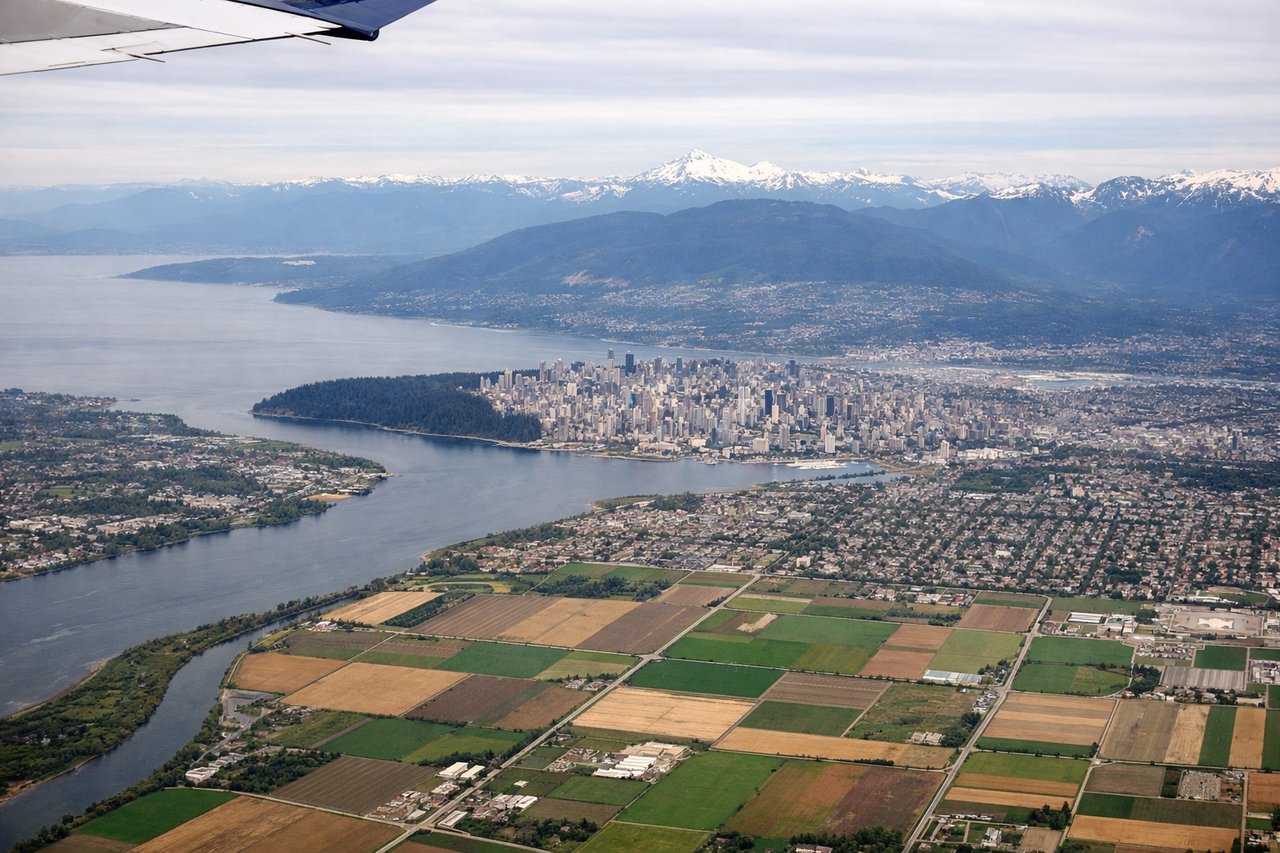
LEFTAfter departing YVR and turning onto its easterly heading, the aircraft's left side faces north, giving a clear view of the North Shore Mountains and the Coast Mountains rising right behind Vancouver, plus the Fraser River delta below. The right side mainly shows the flat waters of the Strait of Georgia and Boundary Bay, which is far less dramatic.
Landing at ORD
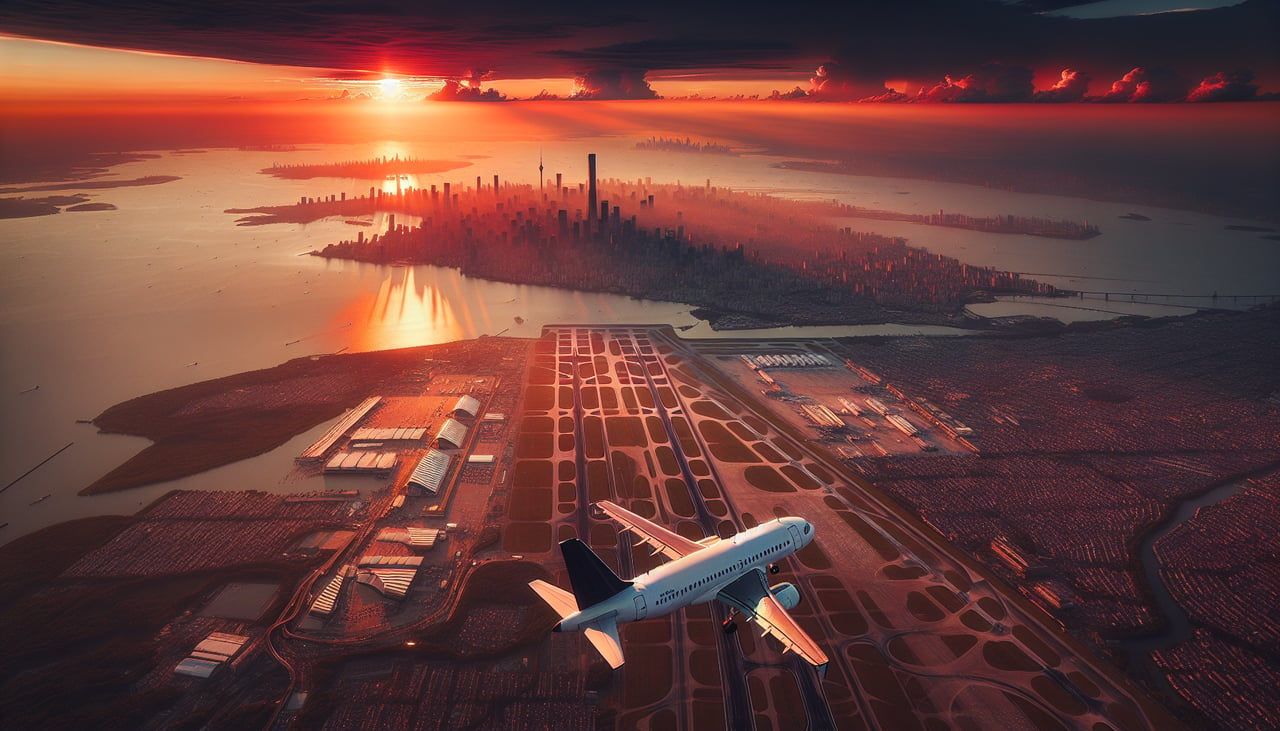
RIGHTO'Hare's westward-landing configuration typically routes arrivals from the northwest south of the field before turning onto final approach, which puts downtown Chicago and the Lake Michigan shoreline on the right side of the aircraft during the turn. The left side during this maneuver mostly shows flat northern Illinois farmland and suburbs.
Landmarks on this routeAll landmarks →
Will your flight be in sunlight?
See exactly which side of the plane gets sun and shade at your departure time.
About This Route
Which side of the plane should I sit on flying from Vancouver International (YVR) to Chicago Ohare International (ORD)?
Sit on the Left side of the plane for the best views on flights from Vancouver to Chicago. The left side wins overall because it captures Vancouver's mountain backdrop on departure and keeps a view toward the Rocky Mountain front (Glacier National Park region) during the western portion of cruise, giving the route its most consistent scenic value, even though the right side gets a brief but strong payoff with the Chicago skyline on landing.
What can I see during takeoff from Vancouver International in Vancouver?
During takeoff from Vancouver International (YVR), sit on the Left side for the best views. After departing YVR and turning onto its easterly heading, the aircraft's left side faces north, giving a clear view of the North Shore Mountains and the Coast Mountains rising right behind Vancouver, plus the Fraser River delta below. The right side mainly shows the flat waters of the Strait of Georgia and Boundary Bay, which is far less dramatic. Notable sights include: North Shore Mountains (Grouse, Seymour, Cypress), Coast Mountains, Fraser River delta, Burrard Inlet/downtown Vancouver.
What can I see when landing at Chicago Ohare International in Chicago?
When landing at Chicago Ohare International (ORD), sit on the Right side for the best views. O'Hare's westward-landing configuration typically routes arrivals from the northwest south of the field before turning onto final approach, which puts downtown Chicago and the Lake Michigan shoreline on the right side of the aircraft during the turn. The left side during this maneuver mostly shows flat northern Illinois farmland and suburbs. Notable sights include: Chicago skyline (Willis Tower, Loop towers), Lake Michigan shoreline, Navy Pier area, O'Hare's runway grid.
How long is the flight from Vancouver to Chicago?
The flight from Vancouver International (YVR) to Chicago Ohare International (ORD) takes 3h 35m.
What does the Vancouver to Chicago flight path pass over?
The route crosses the Okanogan Highlands and Idaho panhandle before skirting the northern Rocky Mountain front near Montana's Glacier National Park region, then flattens out over the plains of North Dakota and Minnesota, crossing the upper Mississippi River valley and Wisconsin farmland before Lake Michigan comes into view on the descent into Chicago.