While left offers excellent Vancouver departure scenery, the right side captures the more dramatic and visually distinctive Dubai arrival sequence, including the iconic Palm Jumeirah and downtown skyline. The landing views are more spectacular than the takeoff views on the opposite side.
Flown YVR to DWC? Did we get it right?
Flight Path
Vancouver to Dubai is 7,317 miles (11,775 km), a flight of about 16 hours.
The flight path crosses the Canadian Rockies (visible from both sides during initial climb), then traverses the Arctic regions and northern latitudes. Over the Arctic, you may see the Beaufort Sea and Arctic ice fields (seasonal). The route then descends across northern Russia and Kazakhstan, passing east of the Caspian Sea. As you approach the Middle East, the Alborz Mountains (northern Iran) and the Iranian plateau become visible. The final descent crosses the Strait of Hormuz and enters the Persian Gulf, with Oman's coastal mountains visible to the south before reaching Dubai.
Great circle distance and headings ›


Phase by phase
Takeoff from YVR
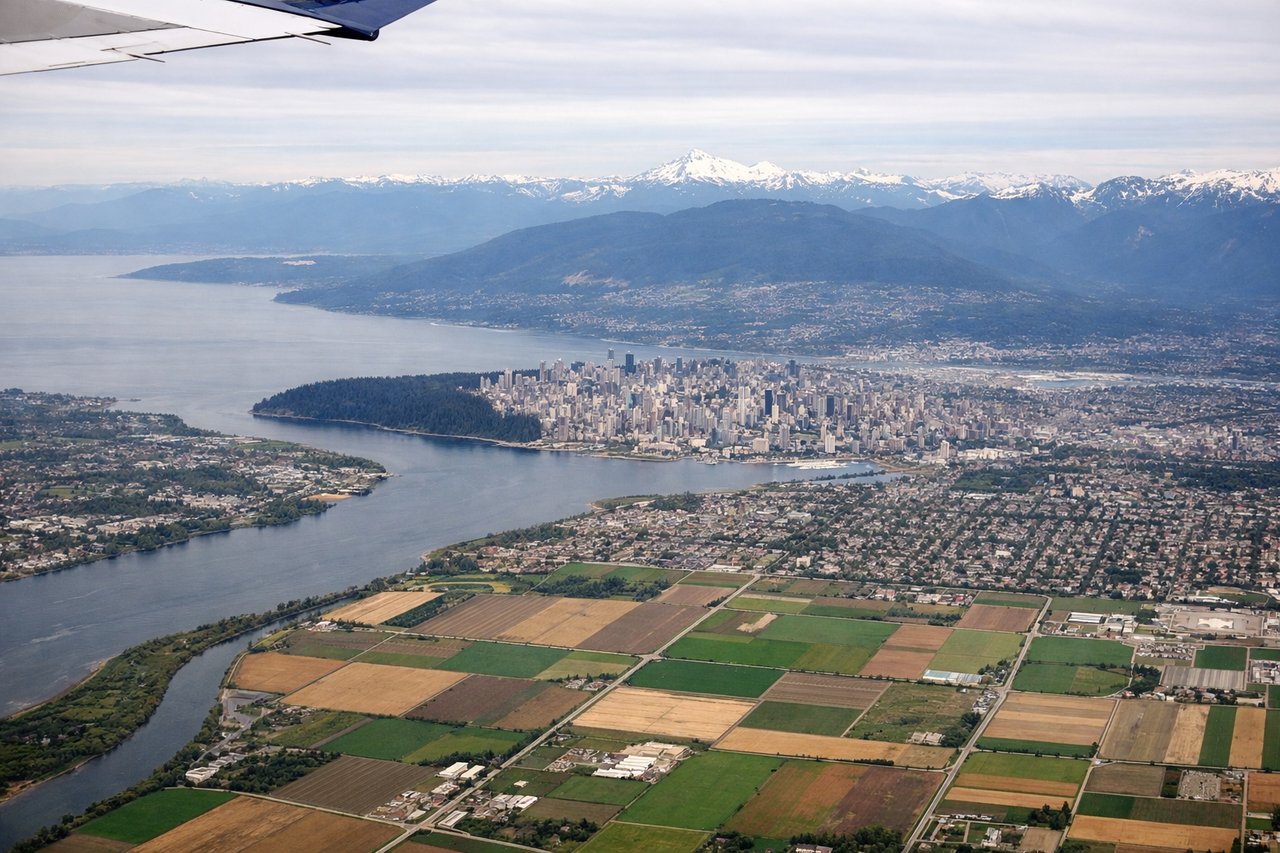
LEFTLeft-side seats offer the best views during Vancouver departure. You'll see the North Shore Mountains immediately after takeoff, followed by the Strait of Georgia and Vancouver Island as the aircraft climbs northwestward on the standard departure corridor.
Landing at DWC
RIGHTRight-side seats provide superior views on approach to Dubai. You'll see the Persian Gulf coastline, the Palm Jumeirah artificial islands, and Dubai's downtown skyline as the aircraft descends from the northeast on final approach vectors.
Will your flight be in sunlight?
Pick a date and time in the Sun Map to watch the sun move across your whole flight.
About This Route
Which side of the plane should I sit on flying from Vancouver International (YVR) to Al Maktoum International Airport (DWC)?
Sit on the Right side of the plane for the best views on flights from Vancouver to Dubai. While left offers excellent Vancouver departure scenery, the right side captures the more dramatic and visually distinctive Dubai arrival sequence, including the iconic Palm Jumeirah and downtown skyline. The landing views are more spectacular than the takeoff views on the opposite side.
What can I see during takeoff from Vancouver International in Vancouver?
During takeoff from Vancouver International (YVR), sit on the Left side for the best views. Left-side seats offer the best views during Vancouver departure. You'll see the North Shore Mountains immediately after takeoff, followed by the Strait of Georgia and Vancouver Island as the aircraft climbs northwestward on the standard departure corridor. Notable sights include: North Shore Mountains (Grouse, Seymour, Cypress peaks), Strait of Georgia, Vancouver Island's eastern coastline, Burrard Inlet.
What can I see when landing at Al Maktoum International Airport in Dubai?
When landing at Al Maktoum International Airport (DWC), sit on the Right side for the best views. Right-side seats provide superior views on approach to Dubai. You'll see the Persian Gulf coastline, the Palm Jumeirah artificial islands, and Dubai's downtown skyline as the aircraft descends from the northeast on final approach vectors. Notable sights include: Persian Gulf coastline, Palm Jumeirah (three palm-shaped artificial islands), Dubai Marina and downtown skyline, Jebel Ali port complex.
How long is the flight from Vancouver to Dubai?
The flight from Vancouver International (YVR) to Al Maktoum International Airport (DWC) takes about 16 hours. The shortest flight path between them is 7,317 miles (11,775 km); winds and air traffic control usually add a few percent.
What does the Vancouver to Dubai flight path pass over?
The flight path crosses the Canadian Rockies (visible from both sides during initial climb), then traverses the Arctic regions and northern latitudes. Over the Arctic, you may see the Beaufort Sea and Arctic ice fields (seasonal). The route then descends across northern Russia and Kazakhstan, passing east of the Caspian Sea. As you approach the Middle East, the Alborz Mountains (northern Iran) and the Iranian plateau become visible. The final descent crosses the Strait of Hormuz and enters the Persian Gulf, with Oman's coastal mountains visible to the south before reaching Dubai.