Left side wins both ends of the flight. During the transpacific cruise at 35,000 feet the great circle route arcs over the Aleutian Islands and southern Alaska, and while both sides see similar ocean, the left side occasionally gets better angles on the Alaskan coastline and Gulf of Alaska as the route curves southeast. Combined with the Tokyo Bay departure and Detroit River arrival, left is the clear choice.
Flight Path
The great circle route from NRT to DTW tracks northeast over the Pacific, passing south of the Kamchatka Peninsula, then over or near the Aleutian Island chain, across the Gulf of Alaska, over southern Alaska and the Alaska Range, then southeast across Canada over British Columbia, Alberta, and the Canadian Shield of Ontario before descending into Michigan. At cruise altitude you may see the volcanic peaks of the Aleutians on clear days, the glaciated Alaska Range, and the vast boreal forest of the Canadian interior.
Great circle distance and headings ›

Phase by phase
Takeoff from NRT
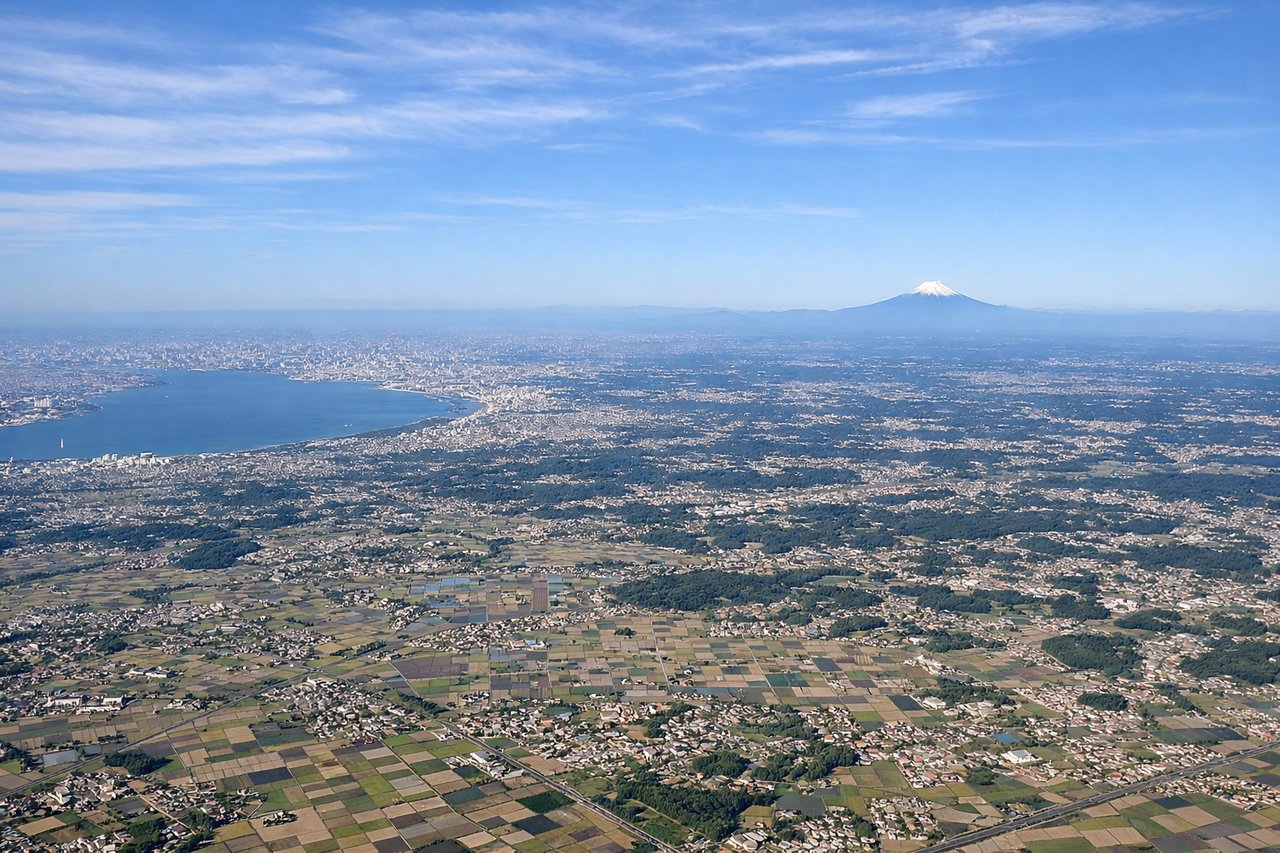
LEFTNRT departures on runway 34L/34R head roughly northward, putting Tokyo Bay and the urban sprawl of central Tokyo off the left (west) side. You get a clear view of the bay's geometry and the dense city grid extending toward Shinjuku and beyond.
Landing at DTW
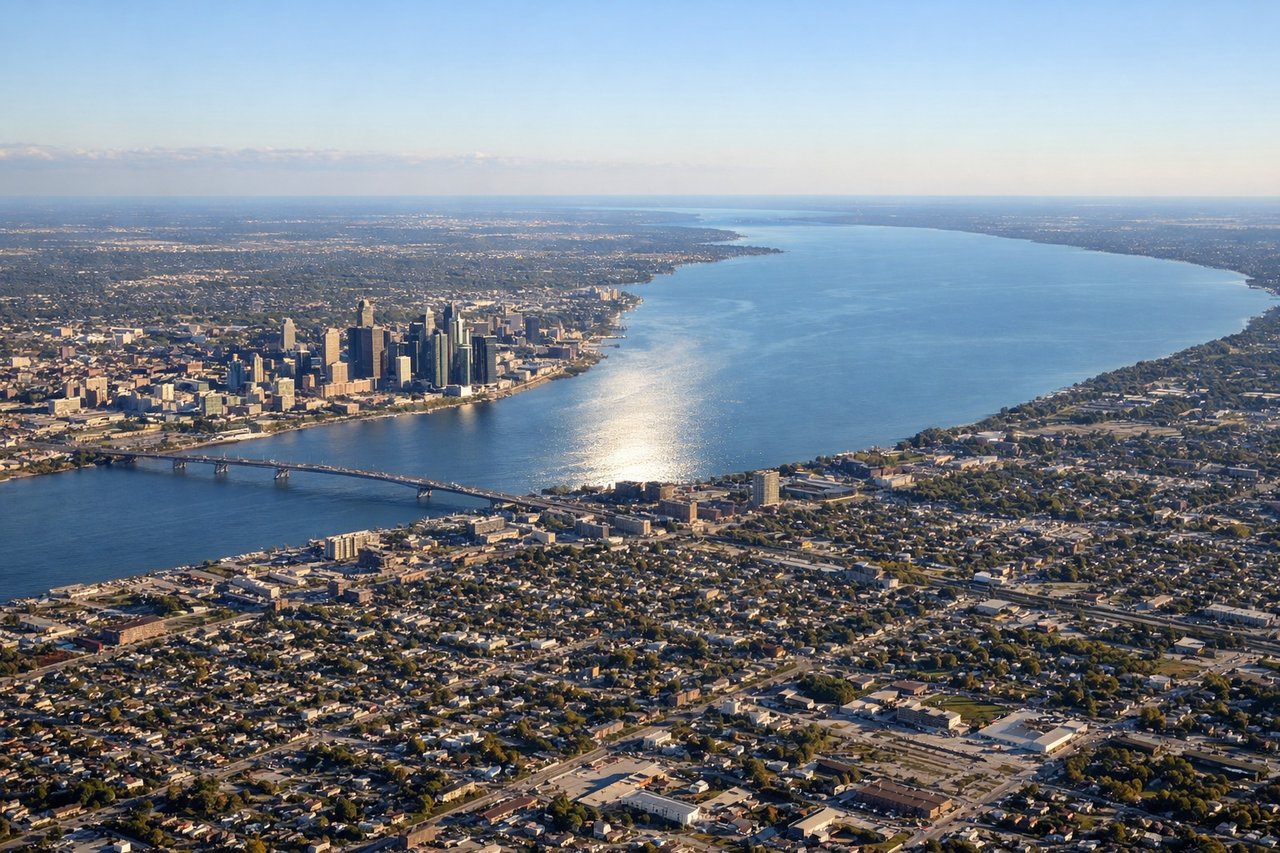
LEFTDTW arrivals typically come in from the east or northeast on runways oriented roughly east-west. A left (south-facing) seat gives you views over Lake Erie's northern shore, the Detroit River, and the Windsor-Detroit urban corridor as you descend. The river and the two-city skyline are the visual payoff.
Landmarks on this routeAll landmarks →
Will your flight be in sunlight?
See exactly which side of the plane gets sun and shade at your departure time.
About This Route
Which side of the plane should I sit on flying from New Tokyo International (NRT) to Detroit Metro Wayne Co (DTW)?
Sit on the Left side of the plane for the best views on flights from Tokyo to Detroit. Left side wins both ends of the flight. During the transpacific cruise at 35,000 feet the great circle route arcs over the Aleutian Islands and southern Alaska, and while both sides see similar ocean, the left side occasionally gets better angles on the Alaskan coastline and Gulf of Alaska as the route curves southeast. Combined with the Tokyo Bay departure and Detroit River arrival, left is the clear choice.
What can I see during takeoff from New Tokyo International in Tokyo?
During takeoff from New Tokyo International (NRT), sit on the Left side for the best views. NRT departures on runway 34L/34R head roughly northward, putting Tokyo Bay and the urban sprawl of central Tokyo off the left (west) side. You get a clear view of the bay's geometry and the dense city grid extending toward Shinjuku and beyond. Notable sights include: Tokyo Bay, central Tokyo urban grid, Chiba coastal lowlands, Edo River delta.
What can I see when landing at Detroit Metro Wayne Co in Detroit?
When landing at Detroit Metro Wayne Co (DTW), sit on the Left side for the best views. DTW arrivals typically come in from the east or northeast on runways oriented roughly east-west. A left (south-facing) seat gives you views over Lake Erie's northern shore, the Detroit River, and the Windsor-Detroit urban corridor as you descend. The river and the two-city skyline are the visual payoff. Notable sights include: Lake Erie northern shoreline, Detroit River, Detroit downtown skyline, Windsor Ontario waterfront.
How long is the flight from Tokyo to Detroit?
The flight from New Tokyo International (NRT) to Detroit Metro Wayne Co (DTW) takes Approximately 12 to 13 hours.
What does the Tokyo to Detroit flight path pass over?
The great circle route from NRT to DTW tracks northeast over the Pacific, passing south of the Kamchatka Peninsula, then over or near the Aleutian Island chain, across the Gulf of Alaska, over southern Alaska and the Alaska Range, then southeast across Canada over British Columbia, Alberta, and the Canadian Shield of Ontario before descending into Michigan. At cruise altitude you may see the volcanic peaks of the Aleutians on clear days, the glaciated Alaska Range, and the vast boreal forest of the Canadian interior.