Tokyo to Unalaska is 2,804 miles (4,512 km), a flight of about 5 hours 55 minutes.
Right side offers superior scenery on departure with views of Tokyo, Mount Fuji, and Tokyo Bay. While left side has advantages during landing, the departure views from Tokyo are more visually rewarding and extensive, making right the better overall choice for this route.
Flight Path
The flight path crosses the North Pacific, passing north of the Japanese archipelago and south of the Kamchatka Peninsula. Over open ocean for most of the journey, you may see the Kuril Islands chain in the distance if flying near them, and the Aleutian Islands chain becomes visible approximately 2-3 hours before landing. The route generally follows a great circle path across the northern Pacific, with limited landmark visibility during the 6-8 hour mid-flight period over open water.
Great circle distance and headings ›Phase by phase
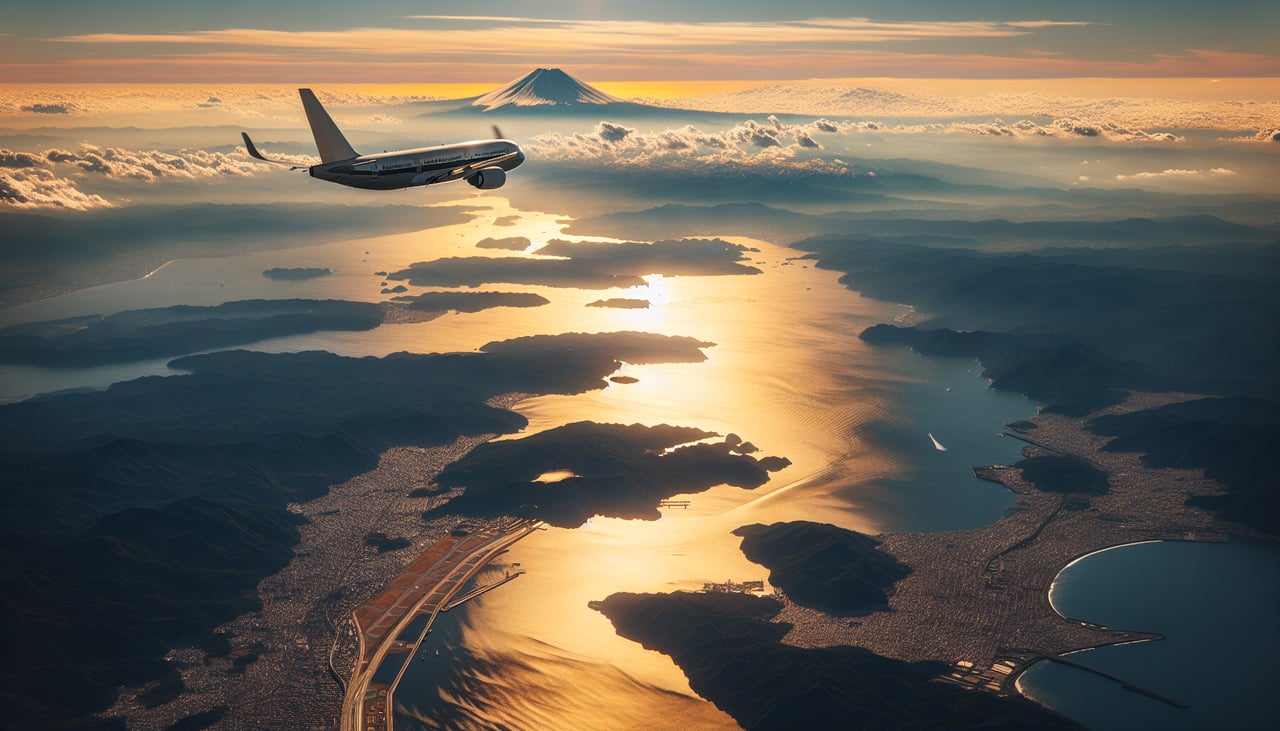
Takeoff from NRT
RIGHTRight side seats face north and northeast during departure from Narita, offering views of the Kanto Plain and Tokyo Bay as the aircraft climbs. You'll see the sprawling urban landscape of the Greater Tokyo Area receding beneath you, with the bay's distinctive shape clearly visible.
Landing at DUT
LEFTLeft side seats provide the best views during approach to Unalaska. You'll see the Aleutian Islands' dramatic volcanic terrain, the Bering Sea, and the steep coastal mountains surrounding Dutch Harbor as you descend into the approach corridor.
Will your flight be in sunlight?
Pick a date and time in the Sun Map to watch the sun move across your whole flight.
About This Route
Which side of the plane should I sit on flying from New Tokyo International (NRT) to Unalaska (DUT)?
Sit on the Right side of the plane for the best views on flights from Tokyo to Unalaska. Right side offers superior scenery on departure with views of Tokyo, Mount Fuji, and Tokyo Bay. While left side has advantages during landing, the departure views from Tokyo are more visually rewarding and extensive, making right the better overall choice for this route.
What can I see during takeoff from New Tokyo International in Tokyo?
During takeoff from New Tokyo International (NRT), sit on the Right side for the best views. Right side seats face north and northeast during departure from Narita, offering views of the Kanto Plain and Tokyo Bay as the aircraft climbs. You'll see the sprawling urban landscape of the Greater Tokyo Area receding beneath you, with the bay's distinctive shape clearly visible. Notable sights include: Tokyo Bay, Kanto Plain urban grid, Mount Fuji (distant, weather permitting on clear days), Boso Peninsula coastline to the southeast.
What can I see when landing at Unalaska in Unalaska?
When landing at Unalaska (DUT), sit on the Left side for the best views. Left side seats provide the best views during approach to Unalaska. You'll see the Aleutian Islands' dramatic volcanic terrain, the Bering Sea, and the steep coastal mountains surrounding Dutch Harbor as you descend into the approach corridor. Notable sights include: Unalaska Island's volcanic peaks, Dutch Harbor and Iliuliuk Harbor, Bering Sea, Makushin Volcano.
How long is the flight from Tokyo to Unalaska?
The flight from New Tokyo International (NRT) to Unalaska (DUT) takes about 5 hours 55 minutes. The shortest flight path between them is 2,804 miles (4,512 km); winds and air traffic control usually add a few percent.
What does the Tokyo to Unalaska flight path pass over?
The flight path crosses the North Pacific, passing north of the Japanese archipelago and south of the Kamchatka Peninsula. Over open ocean for most of the journey, you may see the Kuril Islands chain in the distance if flying near them, and the Aleutian Islands chain becomes visible approximately 2-3 hours before landing. The route generally follows a great circle path across the northern Pacific, with limited landmark visibility during the 6-8 hour mid-flight period over open water.