The left side wins on the strength of an exceptionally scenic and iconic departure sequence over San Francisco Bay and the Golden Gate Bridge, which outweighs the right side's solid but less famous Kobe Bay approach, especially given the roughly ten-hour ocean crossing that mutes both sides during cruise.
Flight Path
The great-circle route curves north from California across the Gulf of Alaska and passes south of the Aleutian Islands before descending toward Japan, with almost the entire cruise phase over open North Pacific waters and no landmasses visible until the Japanese coastline appears during descent.
Great circle distance and headings ›Phase by phase
Takeoff from SFO
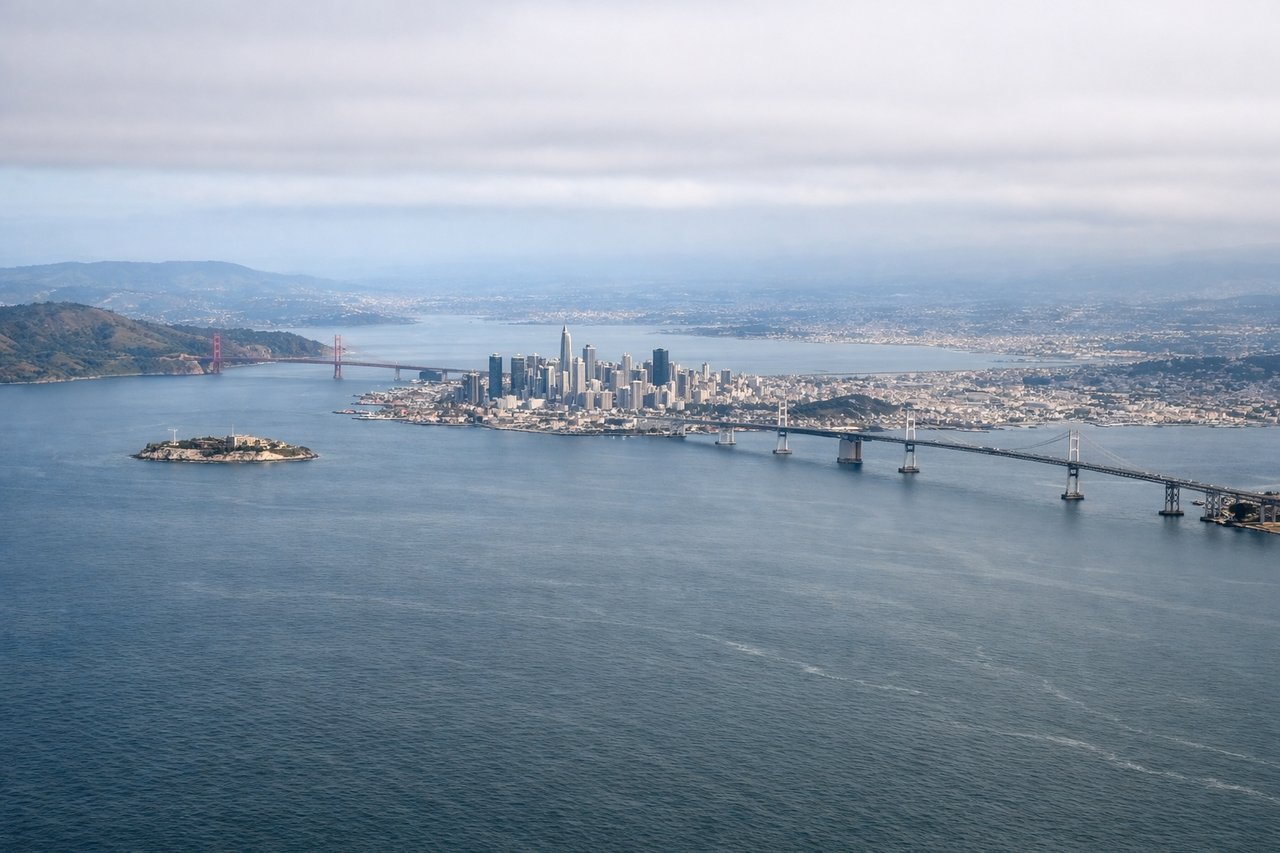
LEFTAfter lifting off to the east over the Bay, the aircraft banks north to join the Pacific routing, putting the Golden Gate Bridge, San Francisco skyline, and Marin Headlands right outside the left windows before the coastline recedes into the Pacific.
Landing at KIX
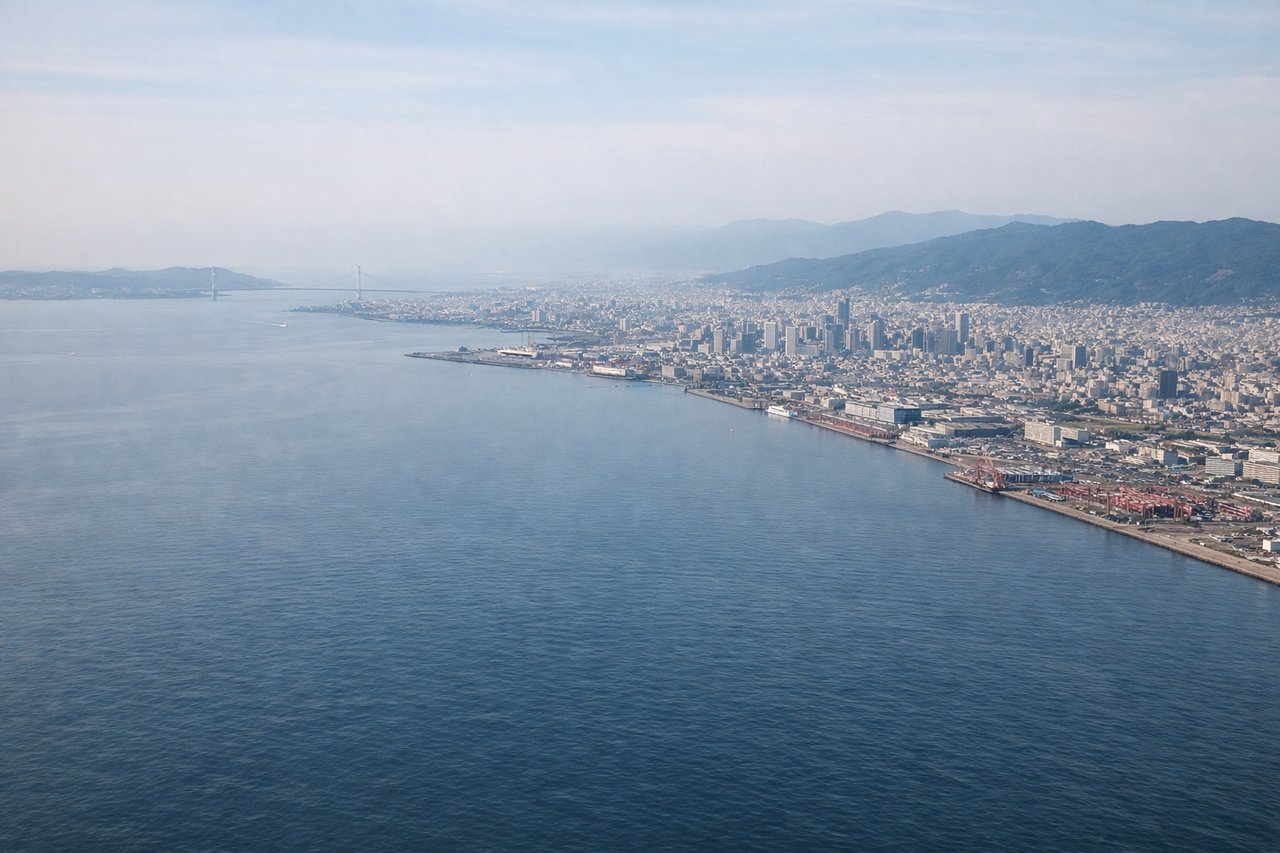
RIGHTOn the typical northeast-to-southwest approach into runway 24, the right side faces northwest toward Kobe's skyline and the Mount Rokko range across Osaka Bay, with Awaji Island visible in the distance before the final descent onto the artificial island runway.
Landmarks on this routeAll landmarks →
Will your flight be in sunlight?
See exactly which side of the plane gets sun and shade at your departure time.
About This Route
Which side of the plane should I sit on flying from San Francisco International (SFO) to Kansai International (KIX)?
Sit on the Left side of the plane for the best views on flights from San Francisco to Osaka. The left side wins on the strength of an exceptionally scenic and iconic departure sequence over San Francisco Bay and the Golden Gate Bridge, which outweighs the right side's solid but less famous Kobe Bay approach, especially given the roughly ten-hour ocean crossing that mutes both sides during cruise.
What can I see during takeoff from San Francisco International in San Francisco?
During takeoff from San Francisco International (SFO), sit on the Left side for the best views. After lifting off to the east over the Bay, the aircraft banks north to join the Pacific routing, putting the Golden Gate Bridge, San Francisco skyline, and Marin Headlands right outside the left windows before the coastline recedes into the Pacific. Notable sights include: Golden Gate Bridge, San Francisco skyline, Marin Headlands, Point Reyes coastline.
What can I see when landing at Kansai International in Osaka?
When landing at Kansai International (KIX), sit on the Right side for the best views. On the typical northeast-to-southwest approach into runway 24, the right side faces northwest toward Kobe's skyline and the Mount Rokko range across Osaka Bay, with Awaji Island visible in the distance before the final descent onto the artificial island runway. Notable sights include: Osaka Bay, Kobe skyline, Mount Rokko range, Awaji Island.
How long is the flight from San Francisco to Osaka?
The flight from San Francisco International (SFO) to Kansai International (KIX) takes 10h 50m.
What does the San Francisco to Osaka flight path pass over?
The great-circle route curves north from California across the Gulf of Alaska and passes south of the Aleutian Islands before descending toward Japan, with almost the entire cruise phase over open North Pacific waters and no landmasses visible until the Japanese coastline appears during descent.