Left side wins both departure and arrival, and across the polar routing over northern Canada and Greenland, the left side also tends to face south toward more sunlit terrain during daylight hours. Consistent advantage throughout.
Flight Path
After departing Vancouver, the route tracks northeast over the Canadian Rockies (visible briefly), then across the boreal forest of northern Alberta and Saskatchewan, over Hudson Bay or northern Quebec depending on routing, across the Labrador coast, then a polar or sub-polar arc over the North Atlantic. Greenland's ice sheet and fjord coastline may be visible if routing passes near it. The route then crosses Iceland or the Norwegian Sea, descends over the North Sea, and crosses the Netherlands or northern Germany before reaching Frankfurt. Greenland's ice cap and the Scottish or Danish coastline are the most visually dramatic midpoint features.
Great circle distance and headings ›
.jpg?width=600)


Phase by phase
Takeoff from YVR
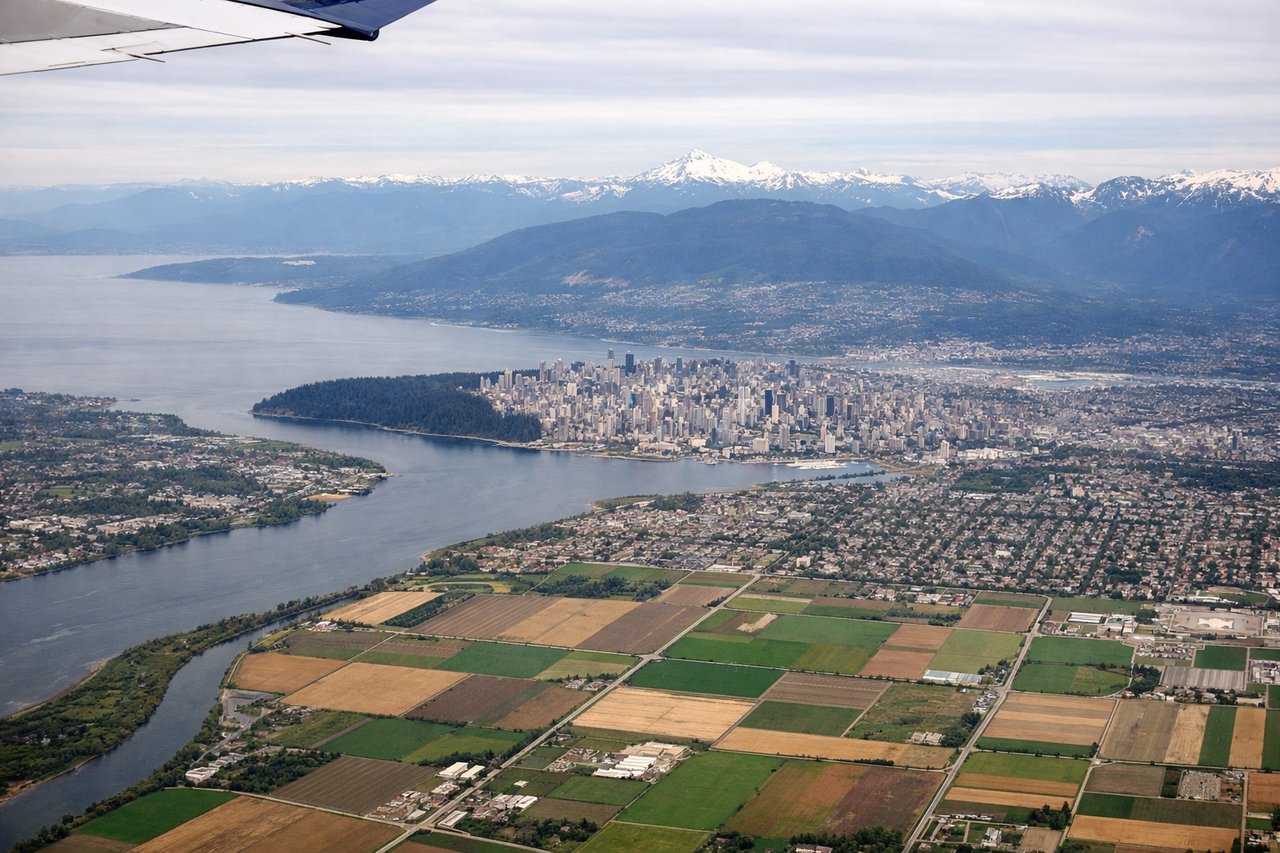
LEFTYVR typically departs eastbound on runway 08L/08R or northbound on 26L/26R. On an eastbound departure, the left (north) side gives you a direct view over the Fraser River delta, Richmond, and then the full sweep of the North Shore mountains including the Garibaldi massif. On a westbound departure over the ocean, left side still captures the city of Vancouver and the Coast Mountains as you bank northeast.
Landing at FRA
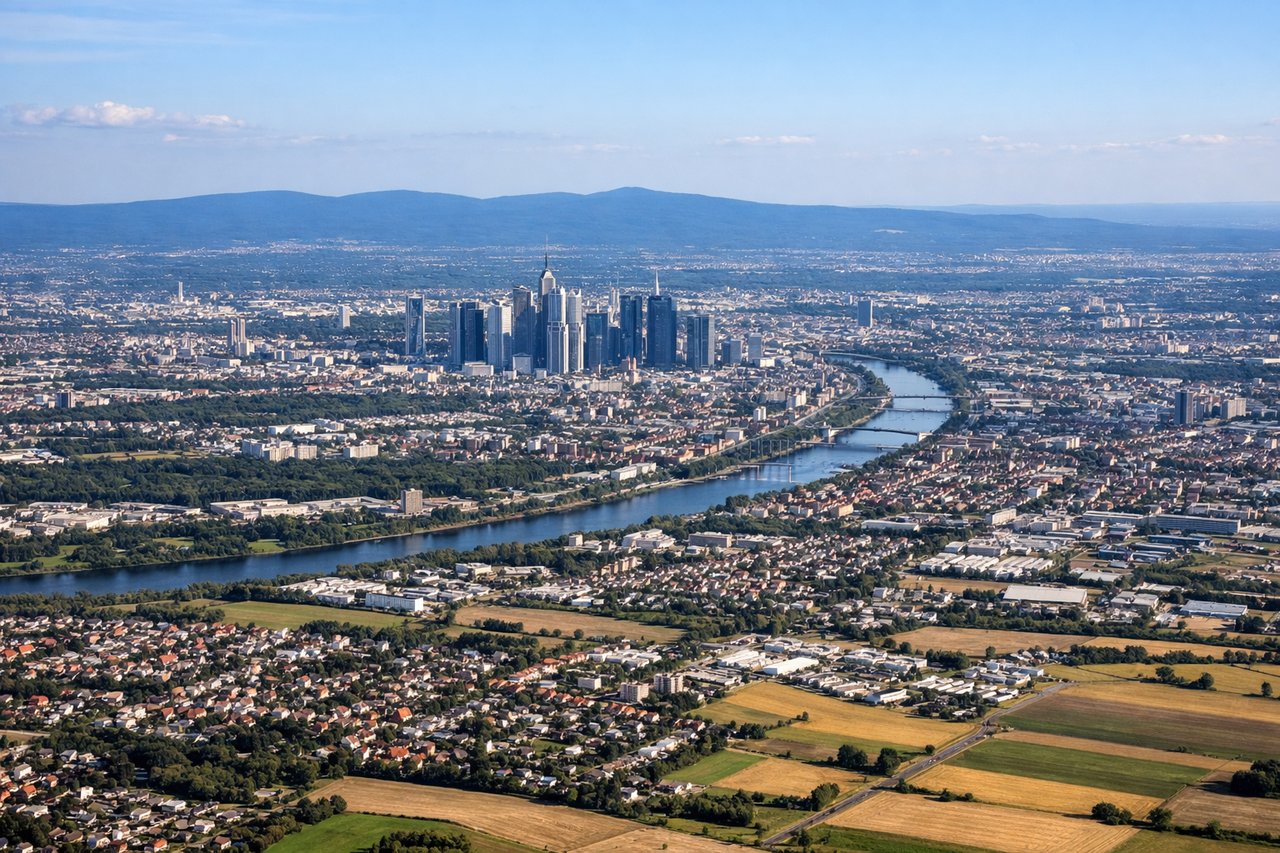
LEFTFrankfurt typically lands on runway 25L/25R or 07L/07R. On the standard westbound approach over central Germany, the left (south) side gives you the Rhine-Main confluence, the Frankfurt skyline, and the Taunus hills to the north. The city's distinctive Bankenviertel skyscrapers are clearly visible from the left side on final approach.
Landmarks on this routeAll landmarks →
Will your flight be in sunlight?
See exactly which side of the plane gets sun and shade at your departure time.
About This Route
Which side of the plane should I sit on flying from Vancouver International (YVR) to Frankfurt Main (FRA)?
Sit on the Left side of the plane for the best views on flights from Vancouver to Frankfurt. Left side wins both departure and arrival, and across the polar routing over northern Canada and Greenland, the left side also tends to face south toward more sunlit terrain during daylight hours. Consistent advantage throughout.
What can I see during takeoff from Vancouver International in Vancouver?
During takeoff from Vancouver International (YVR), sit on the Left side for the best views. YVR typically departs eastbound on runway 08L/08R or northbound on 26L/26R. On an eastbound departure, the left (north) side gives you a direct view over the Fraser River delta, Richmond, and then the full sweep of the North Shore mountains including the Garibaldi massif. On a westbound departure over the ocean, left side still captures the city of Vancouver and the Coast Mountains as you bank northeast. Notable sights include: Coast Mountains (Garibaldi massif), Fraser River delta, Burrard Inlet, City of Vancouver downtown peninsula.
What can I see when landing at Frankfurt Main in Frankfurt?
When landing at Frankfurt Main (FRA), sit on the Left side for the best views. Frankfurt typically lands on runway 25L/25R or 07L/07R. On the standard westbound approach over central Germany, the left (south) side gives you the Rhine-Main confluence, the Frankfurt skyline, and the Taunus hills to the north. The city's distinctive Bankenviertel skyscrapers are clearly visible from the left side on final approach. Notable sights include: Frankfurt Bankenviertel skyline, Rhine-Main river confluence, Taunus hills, Sachsenhausen district and Main River bend.
How long is the flight from Vancouver to Frankfurt?
The flight from Vancouver International (YVR) to Frankfurt Main (FRA) takes Approximately 9 to 10 hours.
What does the Vancouver to Frankfurt flight path pass over?
After departing Vancouver, the route tracks northeast over the Canadian Rockies (visible briefly), then across the boreal forest of northern Alberta and Saskatchewan, over Hudson Bay or northern Quebec depending on routing, across the Labrador coast, then a polar or sub-polar arc over the North Atlantic. Greenland's ice sheet and fjord coastline may be visible if routing passes near it. The route then crosses Iceland or the Norwegian Sea, descends over the North Sea, and crosses the Netherlands or northern Germany before reaching Frankfurt. Greenland's ice cap and the Scottish or Danish coastline are the most visually dramatic midpoint features.