Vancouver to Manila is 6,558 miles (10,554 km), a flight of about 12 hours 40 minutes.
While the takeoff on the left is spectacular, the landing approach on the right provides more sustained scenic value—Manila Bay and the coastal approach are visually distinctive for a longer duration. Right seats capture the most dramatic final descent segment.
Flight Path
The flight path crosses the Pacific northwestward, passing over or near the Queen Charlotte Islands (Haida Gwaii) off British Columbia's coast, then over open ocean. Depending on routing, the aircraft may pass near or over Japan's southern islands (Okinawa region) or Taiwan's northern coast before descending into Manila. The midpoint offers primarily open ocean views with occasional cloud formations; no major landmarks are consistently visible during the 8-10 hour oceanic cruise segment.
Great circle distance and headings ›


Phase by phase
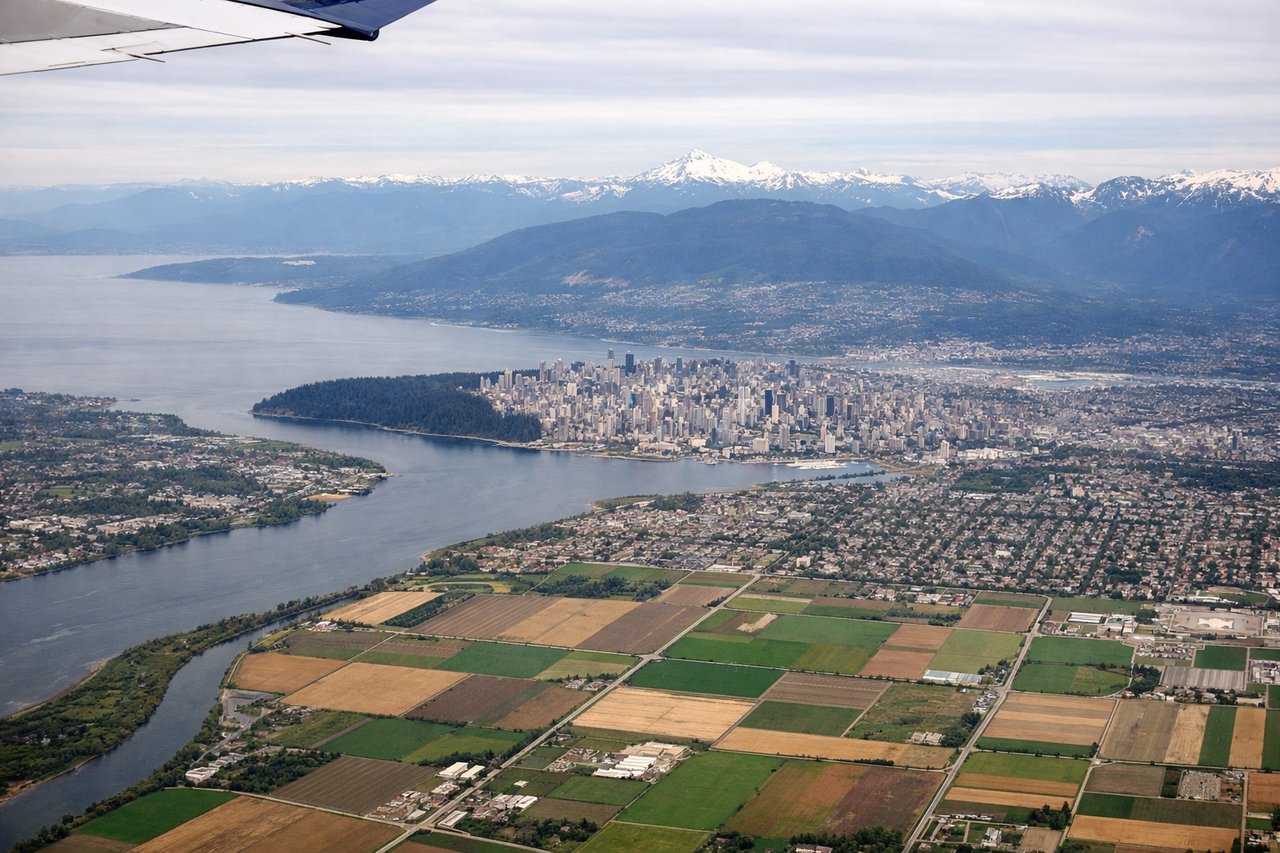
Takeoff from YVR
LEFTLeft seats offer views of the North Shore Mountains and Burrard Inlet during the northwesterly departure climb. You'll see the dramatic peaks of the Coast Range rising directly off the water, a striking contrast that's visible for the first 10-15 minutes of flight.

Landing at MNL
RIGHTRight seats during approach to MNL offer views of Manila Bay and the coastal approach path. You'll see the bay's distinctive shape, the city sprawl of Metro Manila on the eastern shore, and Corregidor Island in the bay—all visible during the final 20-25 minutes of descent.
Landmarks on this routeAll landmarks →
Will your flight be in sunlight?
Pick a date and time in the Sun Map to watch the sun move across your whole flight.
About This Route
Which side of the plane should I sit on flying from Vancouver International (YVR) to Ninoy Aquino International (MNL)?
Sit on the Right side of the plane for the best views on flights from Vancouver to Manila. While the takeoff on the left is spectacular, the landing approach on the right provides more sustained scenic value—Manila Bay and the coastal approach are visually distinctive for a longer duration. Right seats capture the most dramatic final descent segment.
What can I see during takeoff from Vancouver International in Vancouver?
During takeoff from Vancouver International (YVR), sit on the Left side for the best views. Left seats offer views of the North Shore Mountains and Burrard Inlet during the northwesterly departure climb. You'll see the dramatic peaks of the Coast Range rising directly off the water, a striking contrast that's visible for the first 10-15 minutes of flight. Notable sights include: North Shore Mountains (Grouse, Seymour, Cypress peaks), Burrard Inlet, Strait of Georgia, Vancouver Island distant horizon.
What can I see when landing at Ninoy Aquino International in Manila?
When landing at Ninoy Aquino International (MNL), sit on the Right side for the best views. Right seats during approach to MNL offer views of Manila Bay and the coastal approach path. You'll see the bay's distinctive shape, the city sprawl of Metro Manila on the eastern shore, and Corregidor Island in the bay—all visible during the final 20-25 minutes of descent. Notable sights include: Manila Bay, Corregidor Island, Metro Manila urban sprawl, Bataan Peninsula.
How long is the flight from Vancouver to Manila?
The flight from Vancouver International (YVR) to Ninoy Aquino International (MNL) takes about 12 hours 40 minutes. The shortest flight path between them is 6,558 miles (10,554 km); winds and air traffic control usually add a few percent.
What does the Vancouver to Manila flight path pass over?
The flight path crosses the Pacific northwestward, passing over or near the Queen Charlotte Islands (Haida Gwaii) off British Columbia's coast, then over open ocean. Depending on routing, the aircraft may pass near or over Japan's southern islands (Okinawa region) or Taiwan's northern coast before descending into Manila. The midpoint offers primarily open ocean views with occasional cloud formations; no major landmarks are consistently visible during the 8-10 hour oceanic cruise segment.