While takeoff offers good Seoul views on the right, the landing approach provides more dramatic and sustained visual interest—the Persian Gulf's shallow turquoise waters and the Hajar Mountains are more visually distinctive than Korean coastal terrain. Left seats capture the best of the descent sequence.
Flown ICN to AUH? Did we get it right?
Flight Path
Seoul to Abu Dhabi is 4,248 miles (6,837 km), a flight of about 8 hours 30 minutes.
Flight path crosses the Yellow Sea, then over China's Shandong Peninsula and interior provinces, then the Gobi Desert region, before descending toward the Persian Gulf. The Tian Shan Mountains are visible far to the north (not directly on route). Most of the flight crosses arid inland terrain with minimal distinctive landmarks at cruise altitude.
Great circle distance and headings ›


Phase by phase
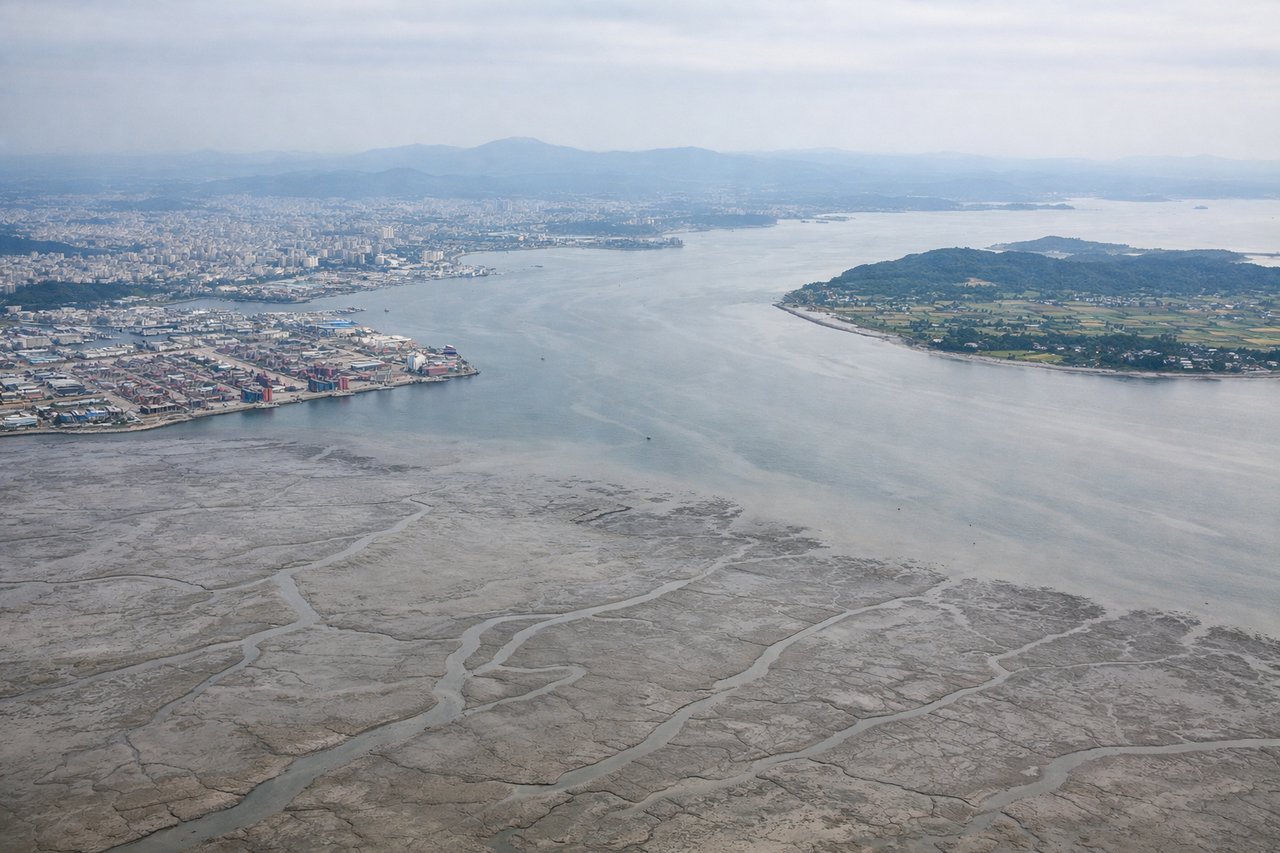
Takeoff from ICN
RIGHTIncheon typically departs eastbound (Runway 16L/R or 34L/R depending on wind). Right-side seats face the Korean peninsula's interior and Yellow Sea coastline during initial climb. You'll see the Han River delta and Seoul metropolitan sprawl receding beneath you.
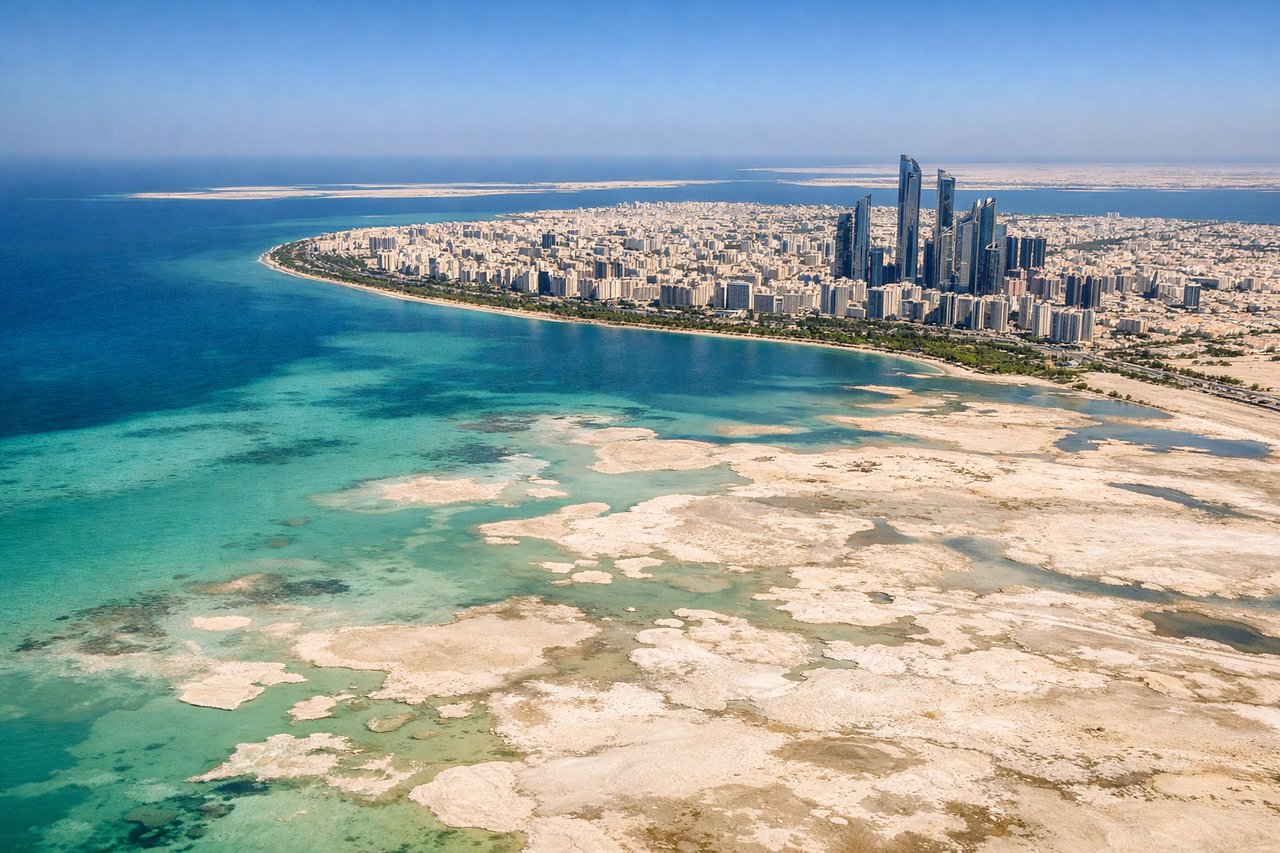
Landing at AUH
LEFTAbu Dhabi typically lands westbound (Runway 31L/R). Left-side seats face the Persian Gulf and the UAE coastline during descent. You'll see the shallow turquoise waters, coastal salt flats, and the Hajar Mountains in the distance as you approach.
Will your flight be in sunlight?
Pick a date and time in the Sun Map to watch the sun move across your whole flight.
About This Route
Which side of the plane should I sit on flying from Incheon International (ICN) to Abu Dhabi International (AUH)?
Sit on the Left side of the plane for the best views on flights from Seoul to Abu Dhabi. While takeoff offers good Seoul views on the right, the landing approach provides more dramatic and sustained visual interest—the Persian Gulf's shallow turquoise waters and the Hajar Mountains are more visually distinctive than Korean coastal terrain. Left seats capture the best of the descent sequence.
What can I see during takeoff from Incheon International in Seoul?
During takeoff from Incheon International (ICN), sit on the Right side for the best views. Incheon typically departs eastbound (Runway 16L/R or 34L/R depending on wind). Right-side seats face the Korean peninsula's interior and Yellow Sea coastline during initial climb. You'll see the Han River delta and Seoul metropolitan sprawl receding beneath you. Notable sights include: Han River estuary, Seoul city grid, Gimpo area industrial zones, Yellow Sea coastline.
What can I see when landing at Abu Dhabi International in Abu Dhabi?
When landing at Abu Dhabi International (AUH), sit on the Left side for the best views. Abu Dhabi typically lands westbound (Runway 31L/R). Left-side seats face the Persian Gulf and the UAE coastline during descent. You'll see the shallow turquoise waters, coastal salt flats, and the Hajar Mountains in the distance as you approach. Notable sights include: Persian Gulf shallow waters, Abu Dhabi coastal salt marshes, Hajar Mountains (southeast), Jebel Dhanna peninsula.
How long is the flight from Seoul to Abu Dhabi?
The flight from Incheon International (ICN) to Abu Dhabi International (AUH) takes about 8 hours 30 minutes. The shortest flight path between them is 4,248 miles (6,837 km); winds and air traffic control usually add a few percent.
What does the Seoul to Abu Dhabi flight path pass over?
Flight path crosses the Yellow Sea, then over China's Shandong Peninsula and interior provinces, then the Gobi Desert region, before descending toward the Persian Gulf. The Tian Shan Mountains are visible far to the north (not directly on route). Most of the flight crosses arid inland terrain with minimal distinctive landmarks at cruise altitude.