While takeoff from Seoul offers interesting urban and river views on the right, the landing approach into São Paulo on the left provides more dramatic and extended scenery—the vast metropolitan sprawl, river systems, and distant highlands create a more visually compelling experience for the majority of the flight's final phase.
Flown ICN to GRU? Did we get it right?
Flight Path
Seoul to Sao Paulo is 11,380 miles (18,314 km), a flight of about 16 hours 20 minutes.
The flight crosses the Indian Ocean, passing south of India and Sri Lanka; the Arabian Sea and Arabian Peninsula appear during the western portion; the Red Sea and Suez Canal region provide geographic markers; the Mediterranean and North Africa follow; the Atlantic Ocean dominates the central and western flight path; approaching Brazil, the South American coastline and interior plateau become visible.
Great circle distance and headings ›


Phase by phase

Takeoff from ICN
RIGHTRight-side seats offer views of Seoul's urban sprawl and the Han River valley during climb-out. The aircraft departs westward over the city, and right-side windows face south toward the densely developed metropolitan area and surrounding hills.
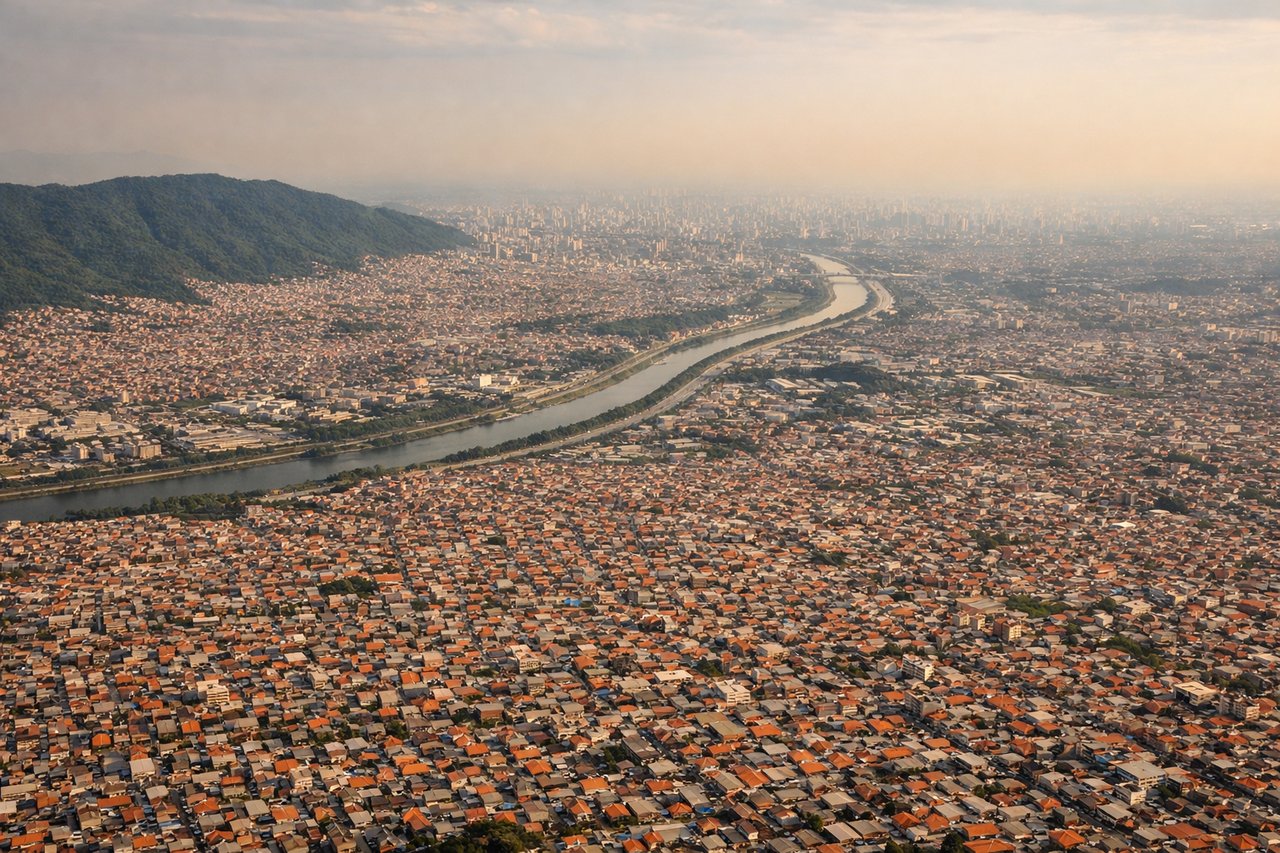
Landing at GRU
LEFTLeft-side seats provide excellent views during the approach to Guarulhos. Aircraft descend from the northeast over the Atlantic coastal region and approach from the east, making left-side windows face toward the city and surrounding terrain during final descent.
Will your flight be in sunlight?
Pick a date and time in the Sun Map to watch the sun move across your whole flight.
About This Route
Which side of the plane should I sit on flying from Incheon International (ICN) to Guarulhos (GRU)?
Sit on the Left side of the plane for the best views on flights from Seoul to Sao Paulo. While takeoff from Seoul offers interesting urban and river views on the right, the landing approach into São Paulo on the left provides more dramatic and extended scenery—the vast metropolitan sprawl, river systems, and distant highlands create a more visually compelling experience for the majority of the flight's final phase.
What can I see during takeoff from Incheon International in Seoul?
During takeoff from Incheon International (ICN), sit on the Right side for the best views. Right-side seats offer views of Seoul's urban sprawl and the Han River valley during climb-out. The aircraft departs westward over the city, and right-side windows face south toward the densely developed metropolitan area and surrounding hills. Notable sights include: Han River (snaking through Seoul's center), Seoul metropolitan area (high-density urban grid), Bukhan Mountains (northern ridge visible beyond the city), Incheon Bay (western approach over water).
What can I see when landing at Guarulhos in Sao Paulo?
When landing at Guarulhos (GRU), sit on the Left side for the best views. Left-side seats provide excellent views during the approach to Guarulhos. Aircraft descend from the northeast over the Atlantic coastal region and approach from the east, making left-side windows face toward the city and surrounding terrain during final descent. Notable sights include: São Paulo metropolitan sprawl (massive urban grid extending to the horizon), Serra da Mantiqueira foothills (eastern highlands visible on approach), Tietê River valley (major river system threading through the city), Atlantic coastal plain (flat terrain to the east).
How long is the flight from Seoul to Sao Paulo?
The flight from Incheon International (ICN) to Guarulhos (GRU) takes about 16 hours 20 minutes. The shortest flight path between them is 11,380 miles (18,314 km); winds and air traffic control usually add a few percent.
What does the Seoul to Sao Paulo flight path pass over?
The flight crosses the Indian Ocean, passing south of India and Sri Lanka; the Arabian Sea and Arabian Peninsula appear during the western portion; the Red Sea and Suez Canal region provide geographic markers; the Mediterranean and North Africa follow; the Atlantic Ocean dominates the central and western flight path; approaching Brazil, the South American coastline and interior plateau become visible.