Takeoff views of Seoul and the Han River are more visually distinctive and sustained than landing views. While Sakurajima is dramatic, the Seoul departure offers longer engagement with recognizable urban and river geography.
Flown ICN to KOJ? Did we get it right?
Flight Path
Seoul to Kagoshima is 460 miles (741 km), a flight of about 1 hour 50 minutes.
Korea Strait crossing (open water between Korean peninsula and Kyushu), Tsushima Island (mountainous island visible mid-flight), transition from Korean airspace to Japanese airspace over the strait, approach to Kyushu's northern coast with forested hills and smaller coastal cities
Great circle distance and headings ›Phase by phase
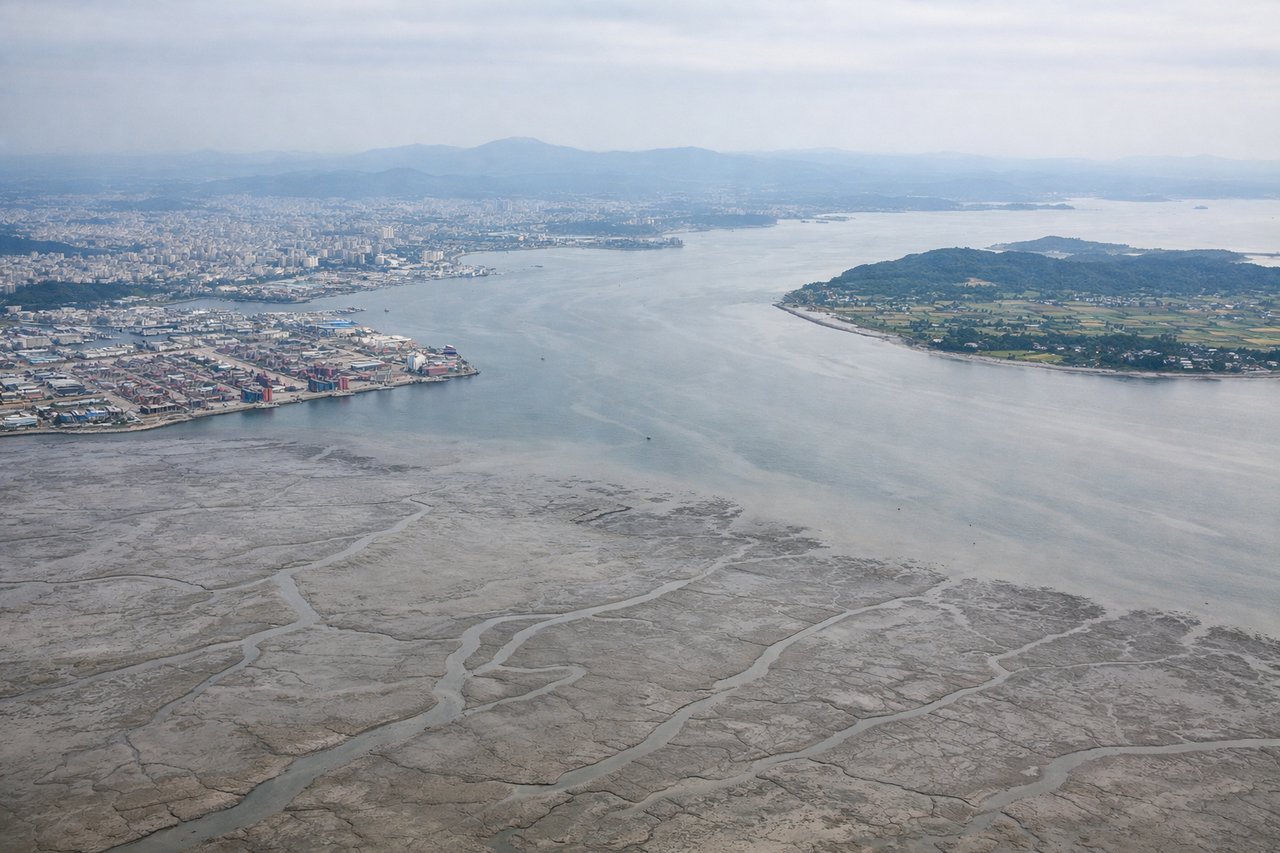
Takeoff from ICN
RIGHTRight-side seats offer views of Seoul's urban sprawl and the Han River valley as you climb out westbound over Incheon. The city grid and river patterns are distinctive and visible up to 10,000 feet before the aircraft turns south toward the Korea Strait.
Landing at KOJ
LEFTLeft-side seats provide views of Kinko Bay's distinctive coastline and Sakurajima volcano as you descend into Kagoshima from the north. The bay's irregular shoreline and the volcano's cone are visually striking during final approach.
Will your flight be in sunlight?
Pick a date and time in the Sun Map to watch the sun move across your whole flight.
About This Route
Which side of the plane should I sit on flying from Incheon International (ICN) to Kagoshima (KOJ)?
Sit on the Right side of the plane for the best views on flights from Seoul to Kagoshima. Takeoff views of Seoul and the Han River are more visually distinctive and sustained than landing views. While Sakurajima is dramatic, the Seoul departure offers longer engagement with recognizable urban and river geography.
What can I see during takeoff from Incheon International in Seoul?
During takeoff from Incheon International (ICN), sit on the Right side for the best views. Right-side seats offer views of Seoul's urban sprawl and the Han River valley as you climb out westbound over Incheon. The city grid and river patterns are distinctive and visible up to 10,000 feet before the aircraft turns south toward the Korea Strait. Notable sights include: Seoul metropolitan area (urban grid), Han River (meandering through city), Incheon waterfront and industrial zones, West Korean coastal plains.
What can I see when landing at Kagoshima in Kagoshima?
When landing at Kagoshima (KOJ), sit on the Left side for the best views. Left-side seats provide views of Kinko Bay's distinctive coastline and Sakurajima volcano as you descend into Kagoshima from the north. The bay's irregular shoreline and the volcano's cone are visually striking during final approach. Notable sights include: Sakurajima volcano (active cone on peninsula), Kinko Bay (large sheltered bay with complex shoreline), Kagoshima city waterfront, Osumi Peninsula to the south.
How long is the flight from Seoul to Kagoshima?
The flight from Incheon International (ICN) to Kagoshima (KOJ) takes about 1 hour 50 minutes. The shortest flight path between them is 460 miles (741 km); winds and air traffic control usually add a few percent.
What does the Seoul to Kagoshima flight path pass over?
Korea Strait crossing (open water between Korean peninsula and Kyushu), Tsushima Island (mountainous island visible mid-flight), transition from Korean airspace to Japanese airspace over the strait, approach to Kyushu's northern coast with forested hills and smaller coastal cities