While takeoff offers brief Yellow Sea views on the right, the landing approach on the left provides sustained, dramatic views of Cambodia's most significant geographical features—Tonlé Sap Lake and the Mekong delta—which dominate the final 30 minutes of descent. The landing experience outweighs the takeoff scenery.
Flown ICN to KTI? Did we get it right?
Flight Path
Seoul to Phnom Penh is 2,244 miles (3,611 km), a flight of about 4 hours 55 minutes.
The flight path crosses the Yellow Sea, then enters mainland China over the Jiangsu province coast before heading south-southwest across eastern China (Anhui, Jiangxi provinces visible), then over northern Vietnam's Red River delta and Hanoi region, before entering Cambodia's northern plains and descending toward Phnom Penh. Notable midpoint landmarks include the Red River delta near Hanoi and the transition from Vietnam's mountainous north to Cambodia's flat central plains.
Great circle distance and headings ›Phase by phase
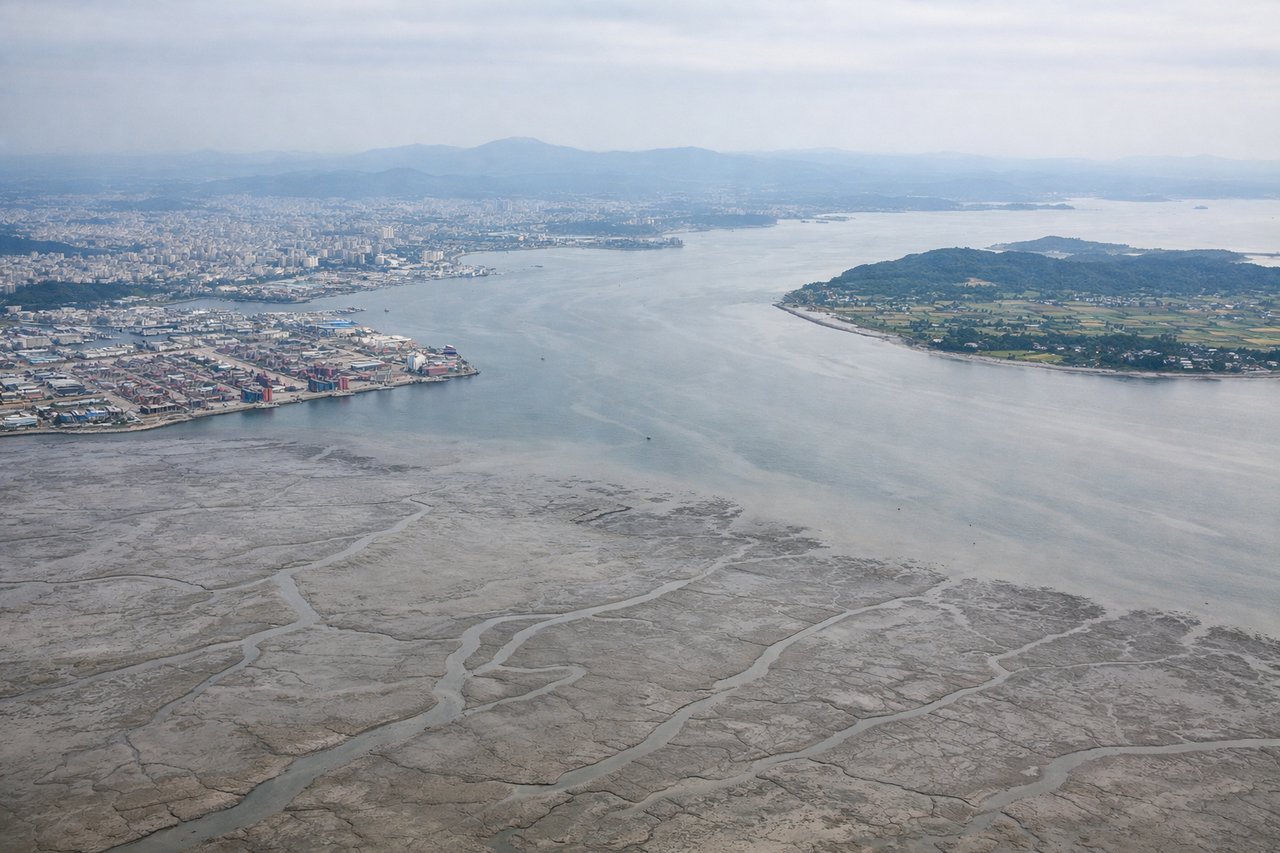
Takeoff from ICN
RIGHTRight-side seats offer views of the Yellow Sea coastline and the Korean peninsula's western edge during the initial climb-out from Incheon. The airport sits on reclaimed land jutting into the sea, making westward views particularly striking in the first 10-15 minutes of flight.
Landing at KTI
LEFTLeft-side seats provide excellent views of the Tonlé Sap Lake and the Mekong River delta during descent into Phnom Penh. These are the dominant geographical features of Cambodia's landscape and are clearly visible from 8,000-15,000 feet on approach from the north.
Will your flight be in sunlight?
Pick a date and time in the Sun Map to watch the sun move across your whole flight.
About This Route
Which side of the plane should I sit on flying from Incheon International (ICN) to Techo International Airport (KTI)?
Sit on the Left side of the plane for the best views on flights from Seoul to Phnom Penh. While takeoff offers brief Yellow Sea views on the right, the landing approach on the left provides sustained, dramatic views of Cambodia's most significant geographical features—Tonlé Sap Lake and the Mekong delta—which dominate the final 30 minutes of descent. The landing experience outweighs the takeoff scenery.
What can I see during takeoff from Incheon International in Seoul?
During takeoff from Incheon International (ICN), sit on the Right side for the best views. Right-side seats offer views of the Yellow Sea coastline and the Korean peninsula's western edge during the initial climb-out from Incheon. The airport sits on reclaimed land jutting into the sea, making westward views particularly striking in the first 10-15 minutes of flight. Notable sights include: Yellow Sea (immediate offshore), Incheon's industrial port facilities and reclaimed islands, Korean peninsula's western coastline, Seoul metropolitan area to the southeast.
What can I see when landing at Techo International Airport in Phnom Penh?
When landing at Techo International Airport (KTI), sit on the Left side for the best views. Left-side seats provide excellent views of the Tonlé Sap Lake and the Mekong River delta during descent into Phnom Penh. These are the dominant geographical features of Cambodia's landscape and are clearly visible from 8,000-15,000 feet on approach from the north. Notable sights include: Tonlé Sap Lake (Southeast Asia's largest freshwater lake), Mekong River and its delta channels, Phnom Penh city sprawl along the river, agricultural plains and rice paddies of central Cambodia.
How long is the flight from Seoul to Phnom Penh?
The flight from Incheon International (ICN) to Techo International Airport (KTI) takes about 4 hours 55 minutes. The shortest flight path between them is 2,244 miles (3,611 km); winds and air traffic control usually add a few percent.
What does the Seoul to Phnom Penh flight path pass over?
The flight path crosses the Yellow Sea, then enters mainland China over the Jiangsu province coast before heading south-southwest across eastern China (Anhui, Jiangxi provinces visible), then over northern Vietnam's Red River delta and Hanoi region, before entering Cambodia's northern plains and descending toward Phnom Penh. Notable midpoint landmarks include the Red River delta near Hanoi and the transition from Vietnam's mountainous north to Cambodia's flat central plains.