Seoul to Tianjin is 507 miles (815 km), a flight of about 1 hour 15 minutes.
While takeoff favors the right, the landing approach on the left provides superior views of Tianjin's major features and the Bohai Sea. The left side captures the approach corridor's most distinctive geography.
Flight Path
The flight crosses the Yellow Sea in a generally southwest direction. At cruise altitude (around 25,000-30,000 feet), the midpoint offers views of open water with occasional shipping traffic visible below. The Shandong Peninsula remains visible to the south/left during the crossing. No major landmarks are distinctly visible at cruise altitude over open water, but the curvature of the coastline and the transition from Korean to Chinese waters is apparent. The approach to Tianjin begins as the aircraft descends toward the Bohai Sea coast, with the Binhai development becoming increasingly distinct.
Great circle distance and headings ›Phase by phase
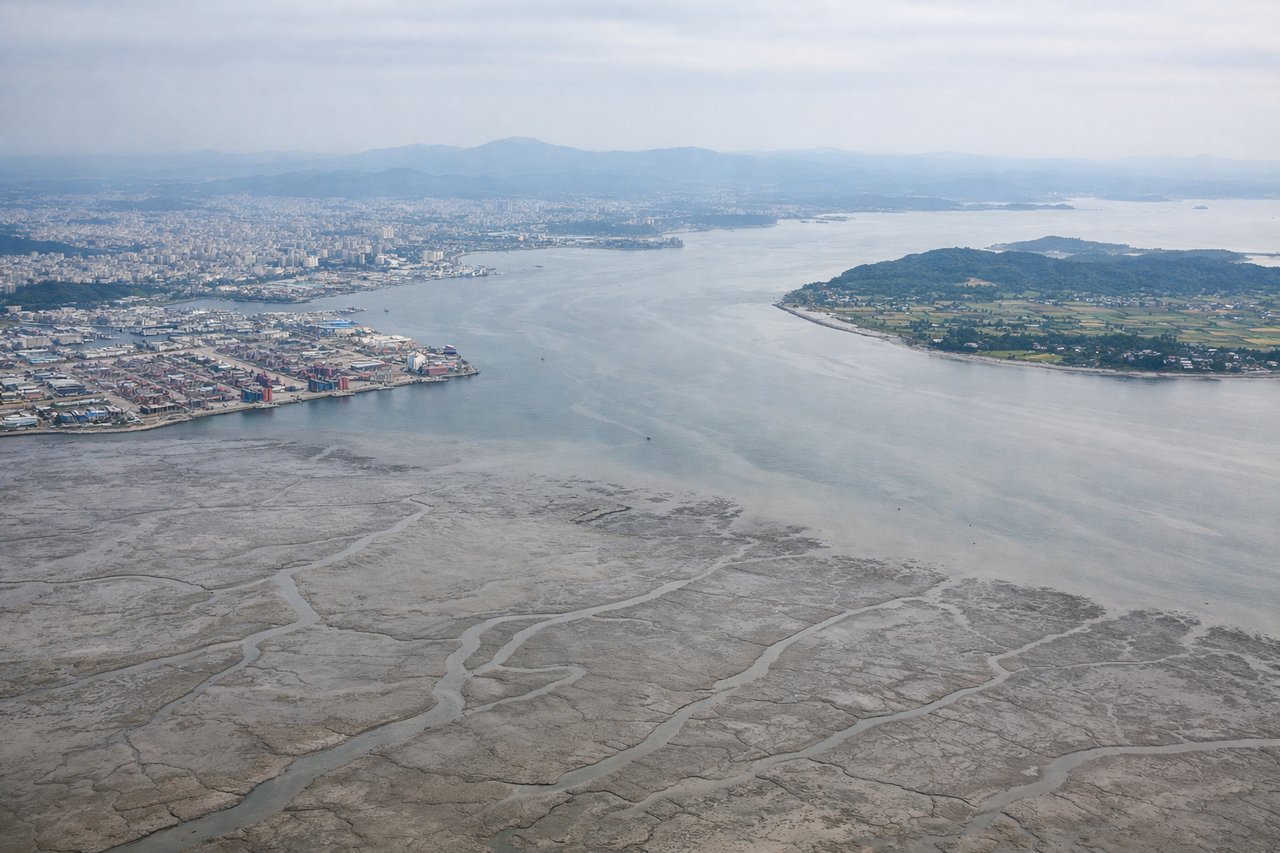
Takeoff from ICN
RIGHTRight-side seats capture the Yellow Sea immediately after departure, with Seoul's urban sprawl visible inland. ICN typically departs runways 15L/15R or 33L/33R; westbound departures on 15L/15R give right-seaters the best view of the water and coastal geography.
Landing at TSN
LEFTLeft-seaters get the best approach view of Tianjin's urban core and the Bohai Sea. TSN typically lands on runways 02L/02R or 20L/20R; southbound approaches on 02L/02R position left-seaters to see the city and water features clearly during descent.
Will your flight be in sunlight?
Pick a date and time in the Sun Map to watch the sun move across your whole flight.
About This Route
Which side of the plane should I sit on flying from Incheon International (ICN) to Binhai (TSN)?
Sit on the Left side of the plane for the best views on flights from Seoul to Tianjin. While takeoff favors the right, the landing approach on the left provides superior views of Tianjin's major features and the Bohai Sea. The left side captures the approach corridor's most distinctive geography.
What can I see during takeoff from Incheon International in Seoul?
During takeoff from Incheon International (ICN), sit on the Right side for the best views. Right-side seats capture the Yellow Sea immediately after departure, with Seoul's urban sprawl visible inland. ICN typically departs runways 15L/15R or 33L/33R; westbound departures on 15L/15R give right-seaters the best view of the water and coastal geography. Notable sights include: Yellow Sea (immediate offshore), Seoul metropolitan area (inland to the left/north), Incheon city districts (directly below), Gyeonggi Province urban corridor (receding inland).
What can I see when landing at Binhai in Tianjin?
When landing at Binhai (TSN), sit on the Left side for the best views. Left-seaters get the best approach view of Tianjin's urban core and the Bohai Sea. TSN typically lands on runways 02L/02R or 20L/20R; southbound approaches on 02L/02R position left-seaters to see the city and water features clearly during descent. Notable sights include: Bohai Sea (visible to the west/left during approach), Tianjin urban districts (Heping, Hexi, Nankai visible below), Binhai New Area development (directly below and right), Haihe River (visible as linear feature through city).
How long is the flight from Seoul to Tianjin?
The flight from Incheon International (ICN) to Binhai (TSN) takes about 1 hour 15 minutes. The shortest flight path between them is 507 miles (815 km); winds and air traffic control usually add a few percent.
What does the Seoul to Tianjin flight path pass over?
The flight crosses the Yellow Sea in a generally southwest direction. At cruise altitude (around 25,000-30,000 feet), the midpoint offers views of open water with occasional shipping traffic visible below. The Shandong Peninsula remains visible to the south/left during the crossing. No major landmarks are distinctly visible at cruise altitude over open water, but the curvature of the coastline and the transition from Korean to Chinese waters is apparent. The approach to Tianjin begins as the aircraft descends toward the Bohai Sea coast, with the Binhai development becoming increasingly distinct.