The right side wins across the whole flight — Incheon's coastal islands and mudflats at departure, a glimpse of the Korea/Tsushima Strait crossing, and a strong finish over Hakata Bay and Fukuoka's waterfront skyline on arrival, versus the comparatively featureless inland views on the left.
Flight Path
Korea Strait (Tsushima Strait) crossing, with Tsushima Island visible below to the west of the flight track before the descent into northern Kyushu
Great circle distance and headings ›Phase by phase
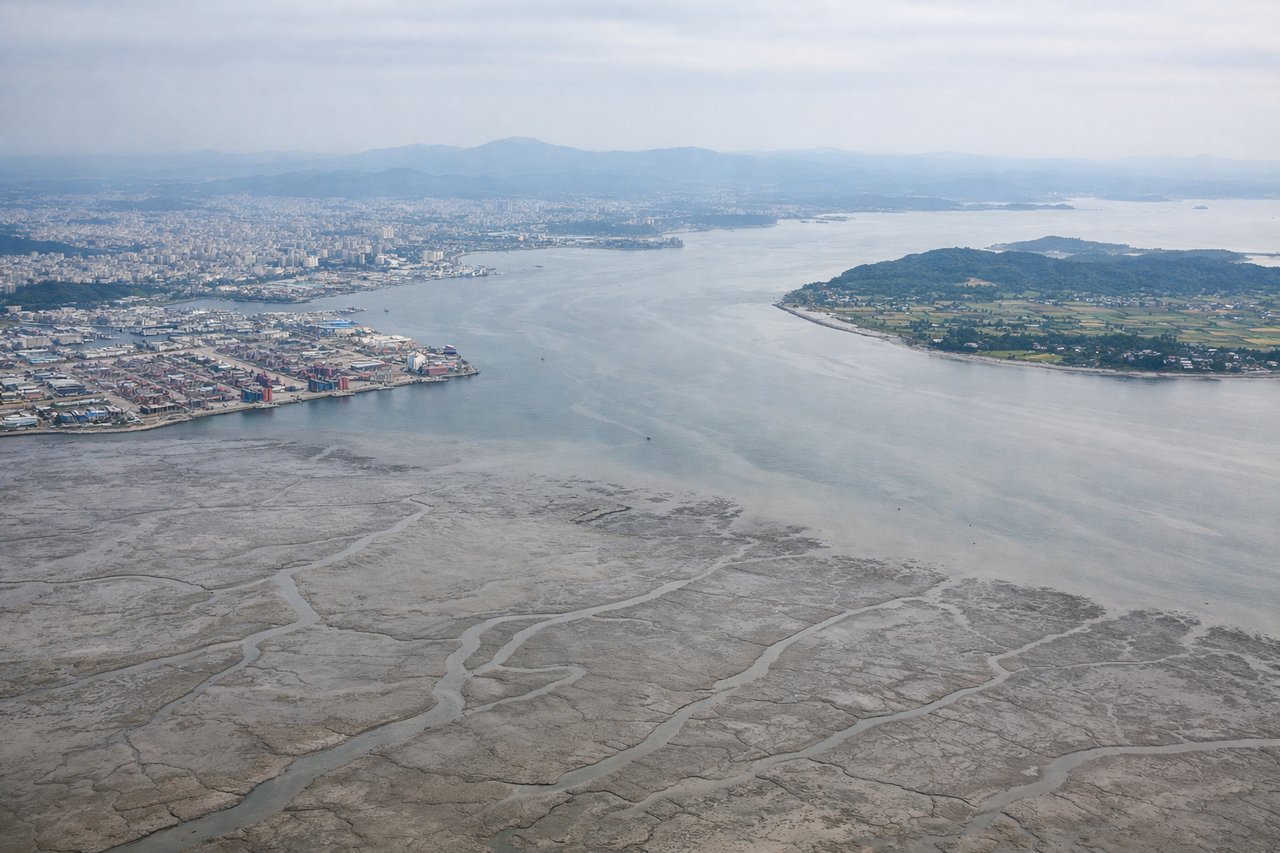
Takeoff from ICN
RIGHTDeparting ICN to the southeast, the right side looks out over Incheon's island geography — the airport's own Yeongjongdo island, the Incheon Bridge, and the tidal mudflats and scattered islets of the Yellow Sea. The left side mostly shows the hazy inland sprawl toward Seoul, which is too far and flat to be dramatic.
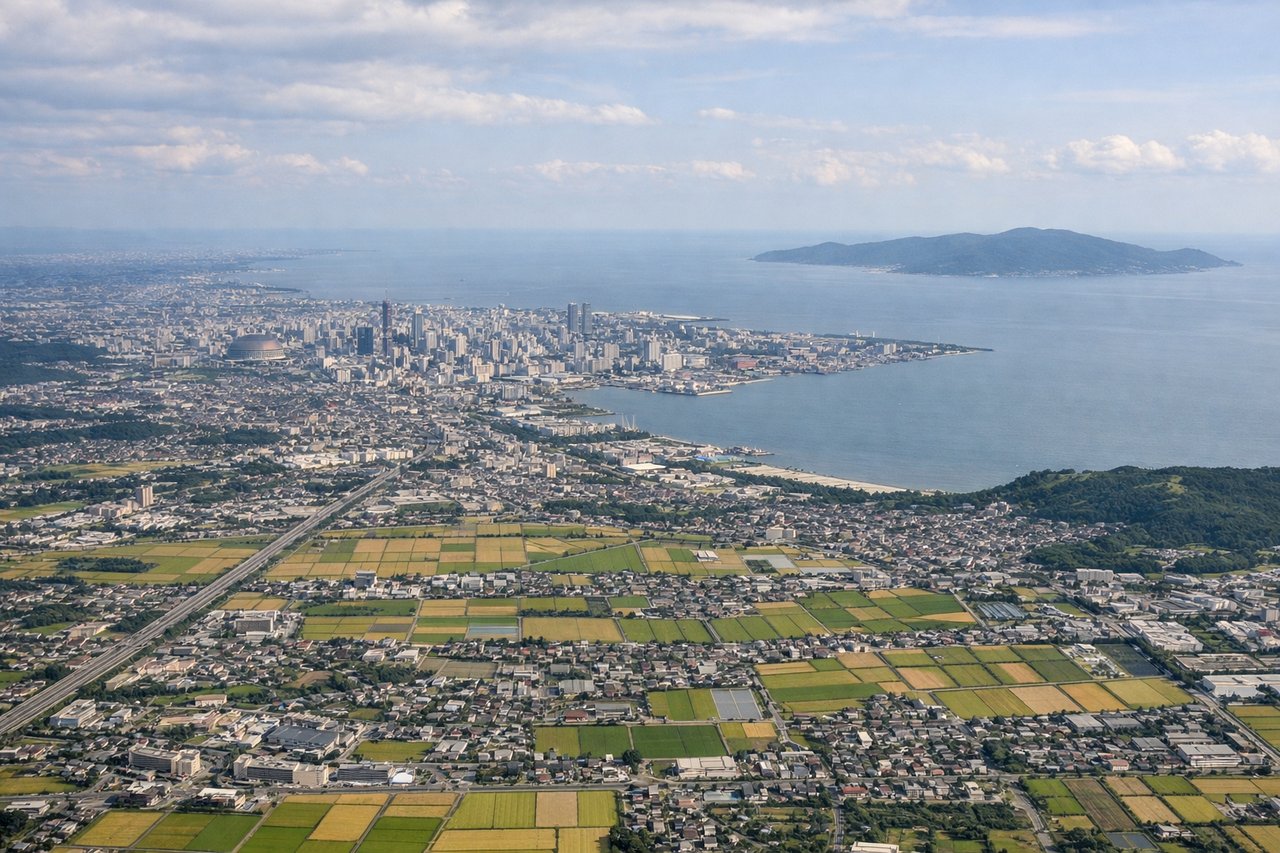
Landing at FUK
RIGHTArriving from the north, the aircraft lines up for a southbound landing at FUK, putting Hakata Bay and downtown Fukuoka's dense waterfront on the right side during final descent. The left side instead faces the low interior hills of Kyushu, which are far less visually distinct than the city and harbor.
Landmarks on this routeAll landmarks →
Will your flight be in sunlight?
See exactly which side of the plane gets sun and shade at your departure time.
About This Route
Which side of the plane should I sit on flying from Incheon International (ICN) to Fukuoka (FUK)?
Sit on the Right side of the plane for the best views on flights from Seoul to Fukuoka. The right side wins across the whole flight — Incheon's coastal islands and mudflats at departure, a glimpse of the Korea/Tsushima Strait crossing, and a strong finish over Hakata Bay and Fukuoka's waterfront skyline on arrival, versus the comparatively featureless inland views on the left.
What can I see during takeoff from Incheon International in Seoul?
During takeoff from Incheon International (ICN), sit on the Right side for the best views. Departing ICN to the southeast, the right side looks out over Incheon's island geography — the airport's own Yeongjongdo island, the Incheon Bridge, and the tidal mudflats and scattered islets of the Yellow Sea. The left side mostly shows the hazy inland sprawl toward Seoul, which is too far and flat to be dramatic. Notable sights include: Incheon Bridge, Yeongjongdo island coastline, Yellow Sea tidal mudflats, scattered West Sea islets.
What can I see when landing at Fukuoka in Fukuoka?
When landing at Fukuoka (FUK), sit on the Right side for the best views. Arriving from the north, the aircraft lines up for a southbound landing at FUK, putting Hakata Bay and downtown Fukuoka's dense waterfront on the right side during final descent. The left side instead faces the low interior hills of Kyushu, which are far less visually distinct than the city and harbor. Notable sights include: Hakata Bay, Fukuoka city skyline (Hakata/Tenjin districts), Fukuoka port cranes and harbor, Genkai Sea coastline.
How long is the flight from Seoul to Fukuoka?
The flight from Incheon International (ICN) to Fukuoka (FUK) takes 1h 25m.
What does the Seoul to Fukuoka flight path pass over?
Korea Strait (Tsushima Strait) crossing, with Tsushima Island visible below to the west of the flight track before the descent into northern Kyushu