Right-side seats dominate both segments: westward views over the Yellow Sea on departure and the dramatic Phang Nga Bay karsts on arrival. This is the consistently superior choice for this route.
Flown ICN to HKT? Did we get it right?
Flight Path
Seoul to Phuket is 2,684 miles (4,320 km), a flight of about 5 hours.
Flight path crosses the Yellow Sea, passes over or near Hainan Island's northern waters, then transitions over the Gulf of Thailand. Notable midpoint geography includes the Vietnamese coast (visible from altitude around 2 hours into flight), the Gulf of Thailand's open water, and the approach to Thailand's Andaman coast. The Mekong Delta region appears as a complex network of waterways and agricultural land during the southern portion of the flight.
Great circle distance and headings ›Phase by phase
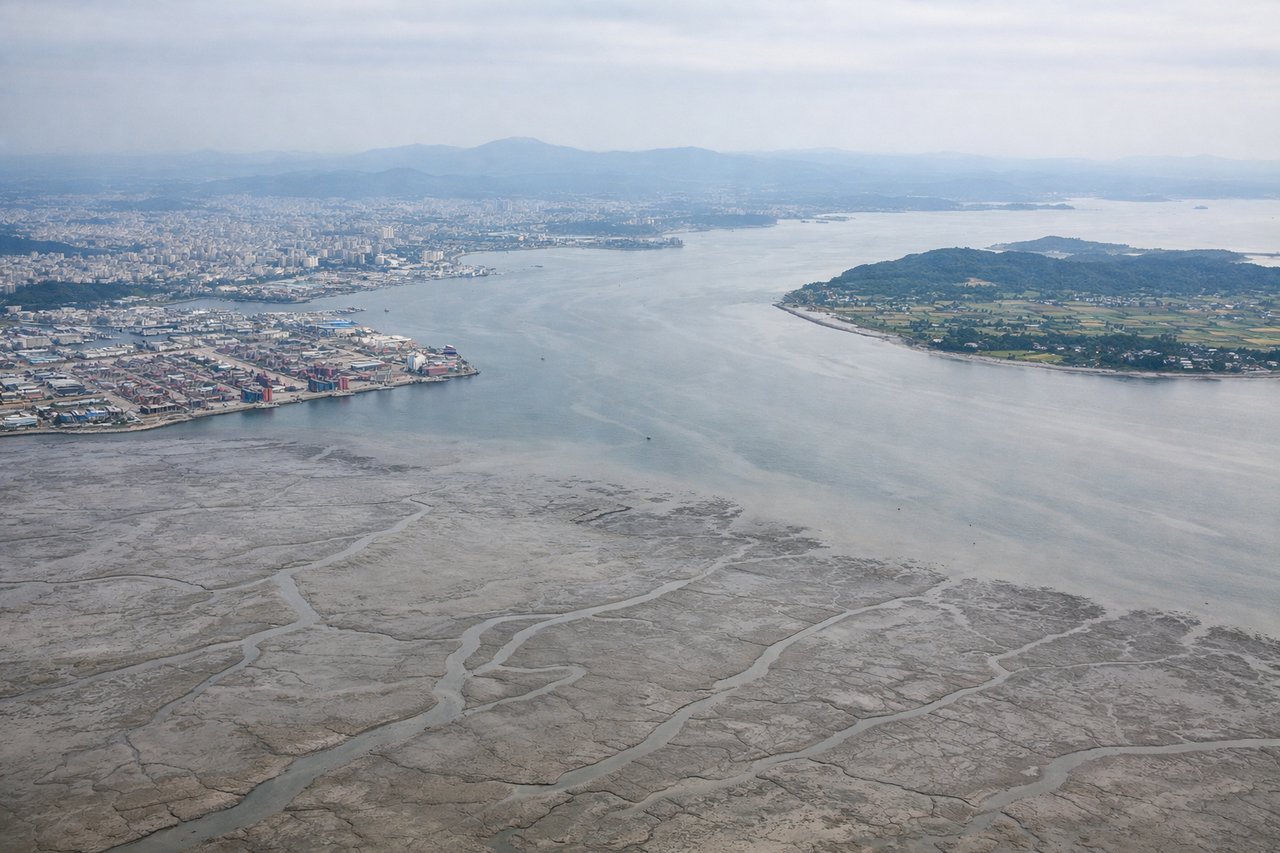
Takeoff from ICN
RIGHTIncheon typically departs runway 16L/R heading south-southwest. Right-side seats face west across the Yellow Sea toward China's Shandong Peninsula, offering water views and distant mainland landmass. Left seats look inland over Seoul's urban sprawl with less dramatic geography.

Landing at HKT
RIGHTPhuket typically lands runway 09 heading east or 27 heading west depending on wind. Right-side seats during approach offer views of Phang Nga Bay's limestone karsts and the Andaman Sea. The dramatic geology of the bay—with its distinctive vertical rock formations—is far more visually distinctive than the flat terrain on approach from the left.
Will your flight be in sunlight?
Pick a date and time in the Sun Map to watch the sun move across your whole flight.
About This Route
Which side of the plane should I sit on flying from Incheon International (ICN) to Phuket International (HKT)?
Sit on the Right side of the plane for the best views on flights from Seoul to Phuket. Right-side seats dominate both segments: westward views over the Yellow Sea on departure and the dramatic Phang Nga Bay karsts on arrival. This is the consistently superior choice for this route.
What can I see during takeoff from Incheon International in Seoul?
During takeoff from Incheon International (ICN), sit on the Right side for the best views. Incheon typically departs runway 16L/R heading south-southwest. Right-side seats face west across the Yellow Sea toward China's Shandong Peninsula, offering water views and distant mainland landmass. Left seats look inland over Seoul's urban sprawl with less dramatic geography. Notable sights include: Yellow Sea (immediate water body), Shandong Peninsula (distant western horizon), Seoul metropolitan area (inland to the left, receding), Incheon's industrial port facilities (below during initial climb).
What can I see when landing at Phuket International in Phuket?
When landing at Phuket International (HKT), sit on the Right side for the best views. Phuket typically lands runway 09 heading east or 27 heading west depending on wind. Right-side seats during approach offer views of Phang Nga Bay's limestone karsts and the Andaman Sea. The dramatic geology of the bay—with its distinctive vertical rock formations—is far more visually distinctive than the flat terrain on approach from the left. Notable sights include: Phang Nga Bay with limestone karsts (James Bond Island area), Andaman Sea, Phuket's eastern coastline, Phuket International Airport runway environment.
How long is the flight from Seoul to Phuket?
The flight from Incheon International (ICN) to Phuket International (HKT) takes about 5 hours. The shortest flight path between them is 2,684 miles (4,320 km); winds and air traffic control usually add a few percent.
What does the Seoul to Phuket flight path pass over?
Flight path crosses the Yellow Sea, passes over or near Hainan Island's northern waters, then transitions over the Gulf of Thailand. Notable midpoint geography includes the Vietnamese coast (visible from altitude around 2 hours into flight), the Gulf of Thailand's open water, and the approach to Thailand's Andaman coast. The Mekong Delta region appears as a complex network of waterways and agricultural land during the southern portion of the flight.