Seoul to Reno is 5,662 miles (9,113 km), a flight of about 11 hours 30 minutes.
While takeoff from Seoul offers urban interest, the landing approach into Reno provides more dramatic and visually distinctive scenery. The Sierra Nevada's steep eastern escarpment is one of North America's most striking geographic features and dominates the final descent. Left-side seats capture this mountain scenery during the most visually rewarding phase of the flight.
Flight Path
The flight crosses the North Pacific Ocean for roughly 7-8 hours with no visible landmarks after leaving the Asian coast until approaching the North American continent. The aircraft typically passes north of Hawaii (not visible on this routing) and crosses the International Date Line. Upon approaching North America, the Cascade Range and Sierra Nevada become visible. The flight path generally tracks over the Pacific Northwest before turning southeast toward Reno, potentially offering views of Mount Shasta or the Klamath Basin region during the final approach phase, depending on exact routing and weather.
Great circle distance and headings ›


Phase by phase
Takeoff from ICN
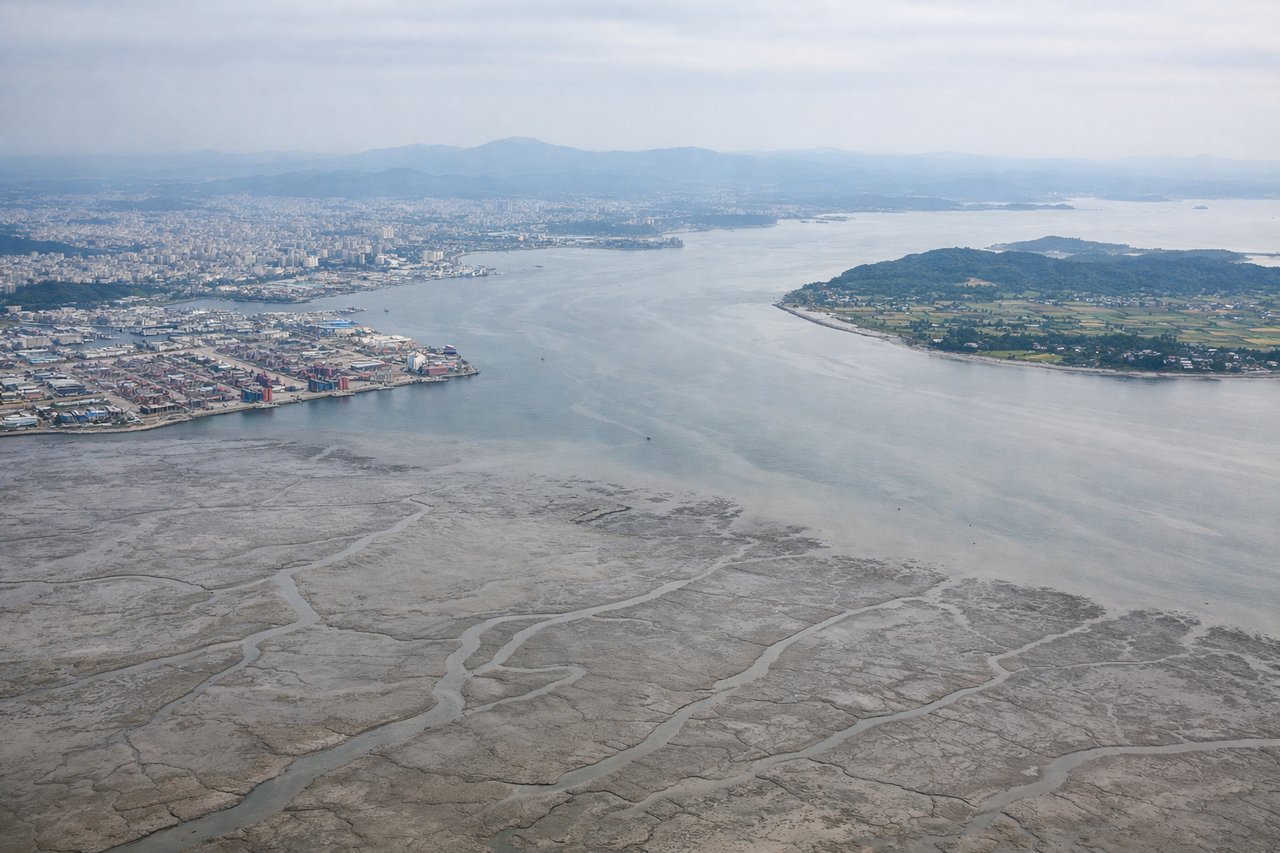
RIGHTRight-side seats offer views of Seoul's urban sprawl and the Han River estuary as the aircraft climbs westward over the Yellow Sea. The city's grid pattern and surrounding agricultural plains are clearly visible during the initial climb.
Landing at RNO
LEFTLeft-side seats provide excellent views of the Sierra Nevada mountain range during descent into Reno. The dramatic eastern escarpment of the Sierra, with its steep granite faces and snow-capped peaks, dominates the approach from the west.
Landmarks on this routeAll landmarks →
Will your flight be in sunlight?
Pick a date and time in the Sun Map to watch the sun move across your whole flight.
About This Route
Which side of the plane should I sit on flying from Incheon International (ICN) to Reno Tahoe International (RNO)?
Sit on the Left side of the plane for the best views on flights from Seoul to Reno. While takeoff from Seoul offers urban interest, the landing approach into Reno provides more dramatic and visually distinctive scenery. The Sierra Nevada's steep eastern escarpment is one of North America's most striking geographic features and dominates the final descent. Left-side seats capture this mountain scenery during the most visually rewarding phase of the flight.
What can I see during takeoff from Incheon International in Seoul?
During takeoff from Incheon International (ICN), sit on the Right side for the best views. Right-side seats offer views of Seoul's urban sprawl and the Han River estuary as the aircraft climbs westward over the Yellow Sea. The city's grid pattern and surrounding agricultural plains are clearly visible during the initial climb. Notable sights include: Seoul metropolitan area, Han River estuary, Incheon port facilities, Yellow Sea coastline.
What can I see when landing at Reno Tahoe International in Reno?
When landing at Reno Tahoe International (RNO), sit on the Left side for the best views. Left-side seats provide excellent views of the Sierra Nevada mountain range during descent into Reno. The dramatic eastern escarpment of the Sierra, with its steep granite faces and snow-capped peaks, dominates the approach from the west. Notable sights include: Sierra Nevada range (including peaks near Lake Tahoe), Washoe Valley, Truckee Meadows, Carson Range.
How long is the flight from Seoul to Reno?
The flight from Incheon International (ICN) to Reno Tahoe International (RNO) takes about 11 hours 30 minutes. The shortest flight path between them is 5,662 miles (9,113 km); winds and air traffic control usually add a few percent.
What does the Seoul to Reno flight path pass over?
The flight crosses the North Pacific Ocean for roughly 7-8 hours with no visible landmarks after leaving the Asian coast until approaching the North American continent. The aircraft typically passes north of Hawaii (not visible on this routing) and crosses the International Date Line. Upon approaching North America, the Cascade Range and Sierra Nevada become visible. The flight path generally tracks over the Pacific Northwest before turning southeast toward Reno, potentially offering views of Mount Shasta or the Klamath Basin region during the final approach phase, depending on exact routing and weather.